Best Wood Pellets for Prime Rib
The best wood pellets for prime rib are the mild ones, because a standing rib roast is the most expensive piece of beef most of us cook all year and the meat itself is the point. A 7 lb bone-in roast runs $100 or more, cooks in about 4 hours, and gets served medium rare, so the smoke's job is to season the beef, not bury it. This page collects the 100% hardwood pellets we'd trust with a holiday roast, from clean single woods to bolder beef blends.
Our pick: start with Kona 100% Oak Wood Pellets. Oak gives prime rib that unmistakable wood-fired depth without a single loud note, and a $12.95 2 lb bag covers the whole cook with pellets to spare.
Why wood choice matters for prime rib
Think about what a prime rib actually is. It's the same ribeye you'd pay steakhouse money for, left whole, roasted slow, and carved at the table. Nobody orders a ribeye and asks the kitchen to cover it up.
A brisket spends 10 to 14 hours in smoke and has the fat and bark to absorb a bold wood. A prime rib spends 3 to 4 hours and gets eaten at 130°F in the center. Mesquite that makes a brisket sing can make a rib roast taste like a campfire.
My one strong opinion for this page: heavy smoke on a prime rib is a mistake. I know bold wood sells, and I sell it. But I've watched someone shrug at a beautiful roast because the smoke got in front of the beef. On a $100 cut, that shrug hurts. Run oak or cherry, keep the temperature at 250°F, and let the roast taste like what you paid for.
The Kona approach to prime rib woods
Wood should be wood. That matters double on a roast this lean on forgiveness, because there's no sauce, no 12-hour bark, and no shredding to hide behind. Whatever burns in the pellet box ends up on the carving board.
Cheap pellets follow a pattern: an inexpensive base wood sprayed with flavor oil, or reclaimed sawdust from wood that was never chosen for cooking. The bag says cherry, the smoke says whatever was cheapest that week. On a holiday roast, that gamble makes no sense.
I spent ten years as a polymer chemist formulating paint before I ever sold a pellet, and the lesson that followed me out of the lab is that raw material decides the finished product. Kona pellets are 100% hardwood with no fillers and nothing sprayed on. When you pay up for the roast, the fuel shouldn't be the weak link.
What makes these picks different
Chosen for a roast served medium rare
Every wood on this page was picked against one test: does it flatter beef that's carved at 130 to 135°F? Oak and cherry pass easily, hickory passes in moderation, and our two beef blends were built for exactly this cook. Woods that fail the test aren't here.
100% hardwood, nothing to second-guess
No flavored base wood, no mystery sawdust, no oils. What's printed on the bag is what's pressed in the pellet. On a cut this pricey, that's the only standard worth having.
2 lb bags match a once-a-year cook
Most people smoke one or two prime ribs a year, and a 4-hour cook at 250°F burns roughly 2 to 4 lb of pellets depending on the device. A 2 lb bag, or two, covers the holiday without leaving a 20 lb sack absorbing moisture in the garage until next December.
Runs in whatever smoker you own
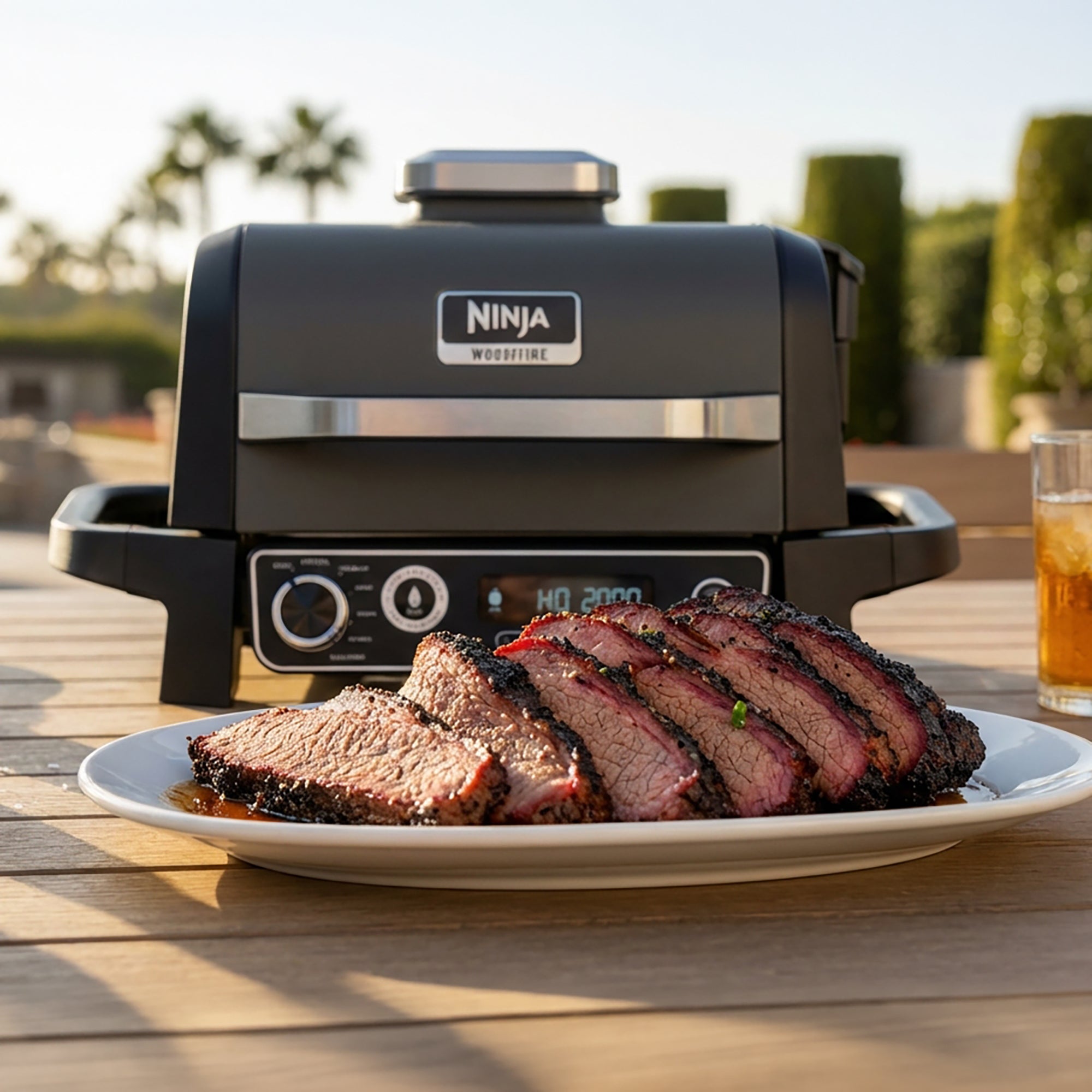
These pellets work in a full-size pellet smoker, a smoker tube on a gas or charcoal grill, and the smoke function on a Ninja Woodfire. The bags are designed for the Ninja Woodfire's small pellet box, so the same wood covers a 4 lb boneless roast on the back patio or a 10 lb bone-in monster in the big rig.
Best wood pellets for prime rib from Kona
Kona 100% Oak Wood Pellets are the default. Oak is what steakhouse wood grills burn, it reads as smoky without taking a side, and it's the wood I'd hand anyone smoking their first rib roast.
Kona 100% Cherry Wood Pellets are the presentation pick. Cherry's mild, slightly sweet smoke deepens the crust to a dark mahogany, and a cherry-smoked prime rib on a carving board is the best-looking centerpiece of the year. Mix it 50/50 with oak and you get color and backbone in one cook.
Kona 100% Hickory Wood Pellets are for the table that already loves smoke. Hickory brings the classic smokehouse flavor, and over a 4-hour cook it stays on the right side of bold. If your crowd asks for more smoke every year, this is the bag.
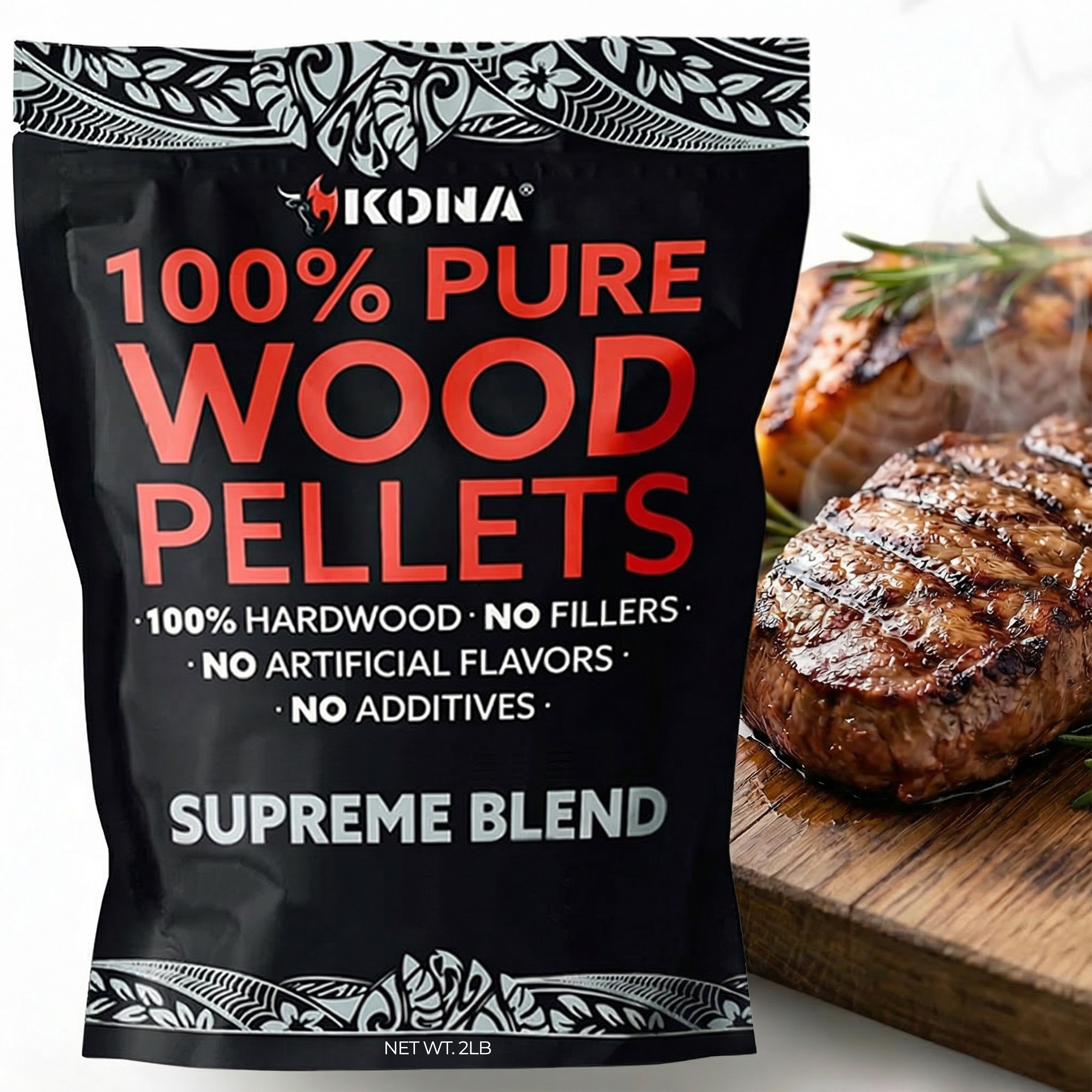
Kona Supreme Blend Pellets were blended for red meat. The profile is rounded and beef forward, landing between oak and hickory, and it's my pick for a mixed table.
Kona Brisket Blend Pellets prove a blend built for one beef cut travels well to another. It was tuned for long beef cooks, and on a prime rib it delivers that barbecue-joint depth in a fraction of the time.
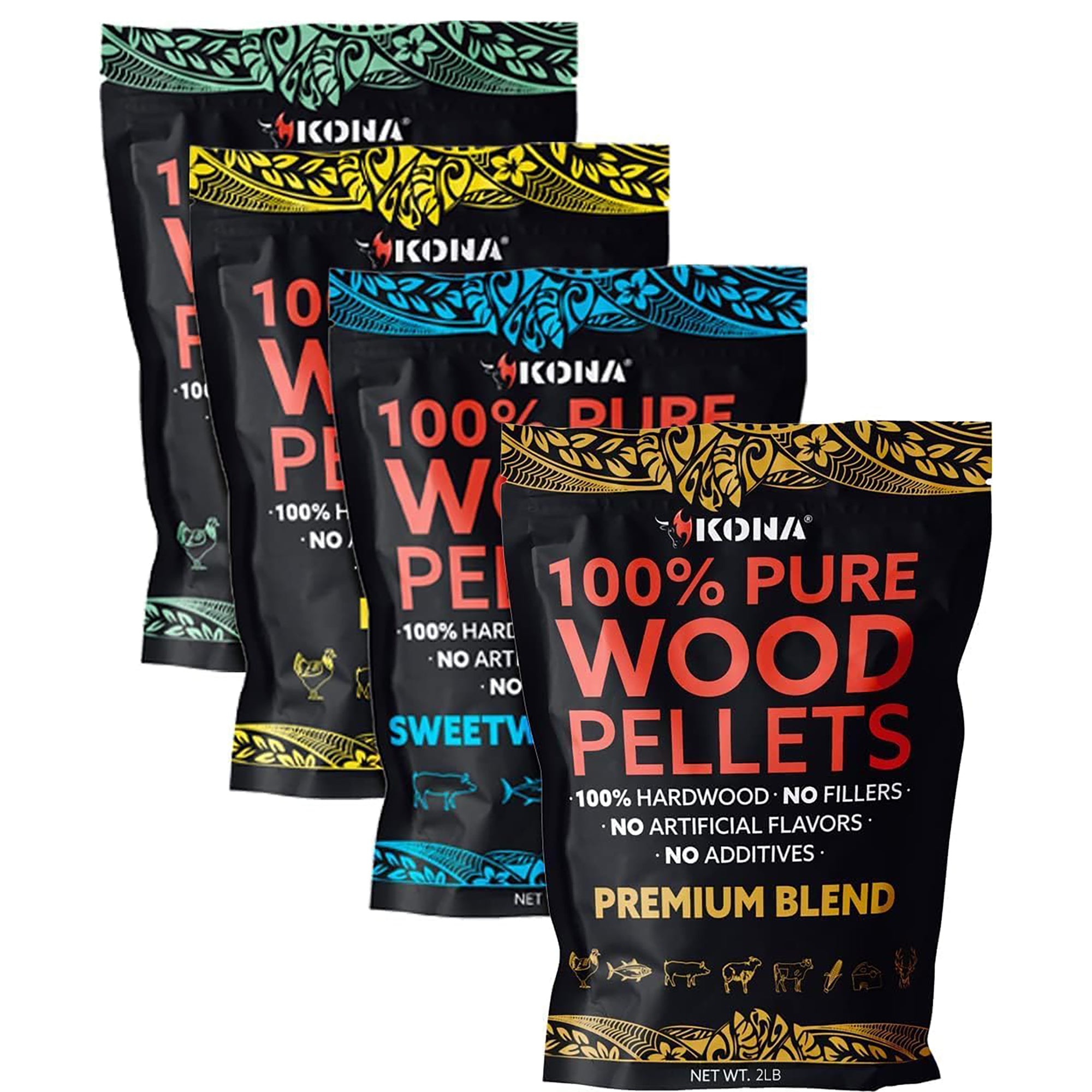
Kona All-Purpose Variety Pack (4 x 2 lb) is the way to settle the oak-versus-cherry question for $34.95. Four woods, four future cooks, and by next December you'll have a house style.
How to smoke a prime rib, start to finish
Figure one bone per two people, about 1 lb per person bone-in. Two days ahead, salt the roast all over and leave it uncovered on a rack in the fridge. That dry-brine seasons the meat deep and dries the surface so the crust browns instead of steaming.
Smoke day: pull the roast an hour early, run your smoker or Ninja Woodfire at 250°F, and put the roast on fat cap up with a probe in the dead center. Plan on roughly 35 minutes per pound, so a 7 lb roast takes about 4 hours. But cook to temperature, not time. Trust your thermometer.
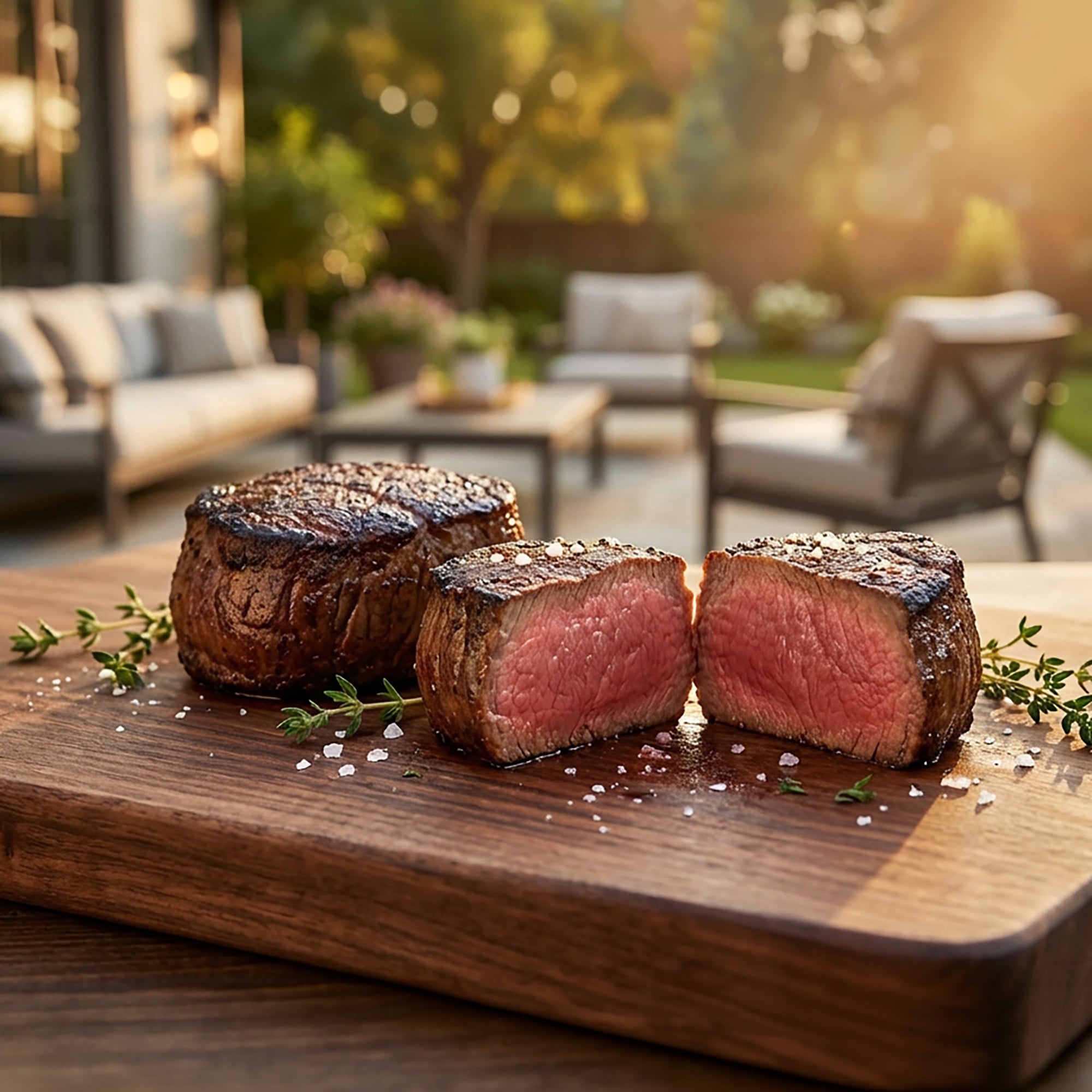
Pull it at 120 to 125°F for medium rare. Rest it loosely tented for 30 minutes while you crank the grill or oven to 500°F, then sear the outside for 8 to 10 minutes until the crust crackles. That reverse sear is the whole trick: an even rosy interior edge to edge, with a crust the slow smoke alone can't build.
Carve the bones off in one slab, slice the eye against the grain, and save the bones. Smoked prime rib bones reheated the next day might be better than the roast.
A note from Jamie
The first prime rib I ever smoked, I treated like a brisket and ran a heavy wood the whole way. It looked incredible. It tasted like the smoker, not the steer, and my family was polite about it, which is the worst review there is. The next year I switched to oak and cherry at 250°F and that roast is now the standing order every December. The mission is flavor, and on this cut the flavor is already in the meat. Your job is to frame it. Mahalo for being a part of our flavorful journey.
Explore more
More from the Kona collection: Best Wood Pellets for Brisket, Best Wood Pellets for Ribs, Best Wood Pellets for Turkey, Hickory vs Mesquite, and 100% Wood Smoker Pellets.
Frequently asked questions
What is the best wood for smoking prime rib?
Oak and cherry are the safest and most popular choices. Oak gives a clean, steakhouse-style smoke and cherry adds mild sweetness and deep color, and a 50/50 mix of the two is hard to beat. Hickory works for crowds that like bolder smoke, while heavy mesquite usually overpowers a roast served medium rare.
How long does it take to smoke a prime rib?
Plan on roughly 35 minutes per pound at 250°F, so a 7 lb roast takes about 4 hours to reach 120 to 125°F in the center. Add a 30 minute rest and an 8 to 10 minute sear at 500°F. Always go by internal temperature rather than the clock.
What temperature do you smoke prime rib at?
Smoke at 225 to 250°F and pull the roast at an internal temperature of 120 to 125°F for medium rare. After a 30 minute rest and a quick high-heat sear, the center lands at 130 to 135°F. A probe thermometer in the thickest part of the eye is the one tool the cook can't skip.
Should you sear prime rib before or after smoking?
Sear after smoking. The reverse sear lets the roast climb slowly and evenly in smoke, then builds the browned crust in 8 to 10 minutes at 500°F right before serving. Searing first blocks smoke absorption and makes it easier to overshoot the center.
Can you smoke a prime rib on a Ninja Woodfire grill?
Yes. A boneless roast in the 3 to 5 lb range fits the grate well, and Kona 2 lb pellet bags are designed for the Ninja Woodfire's small pellet box. Run the smoker function low, top up pellets as needed, and pull the roast at 120 to 125°F before a short, hot sear.
Is prime rib the same as ribeye?
They come from the same rib section of the steer. A prime rib is the whole roast, cooked slow and carved into thick slices, while a ribeye is that roast cut into individual steaks before cooking. Smoking the whole roast gives you more even doneness and a bigger smoke payoff per dollar.
Sort by
6 products