Turkey is a big, lean, mild bird, which makes wood choice a balancing act. You want enough smoke to matter across all that surface area, but not so much that it buries the turkey or turns the skin bitter over a long cook. Get it right and smoked turkey is the best thing on the Thanksgiving table.
Start with the wood, not the bag
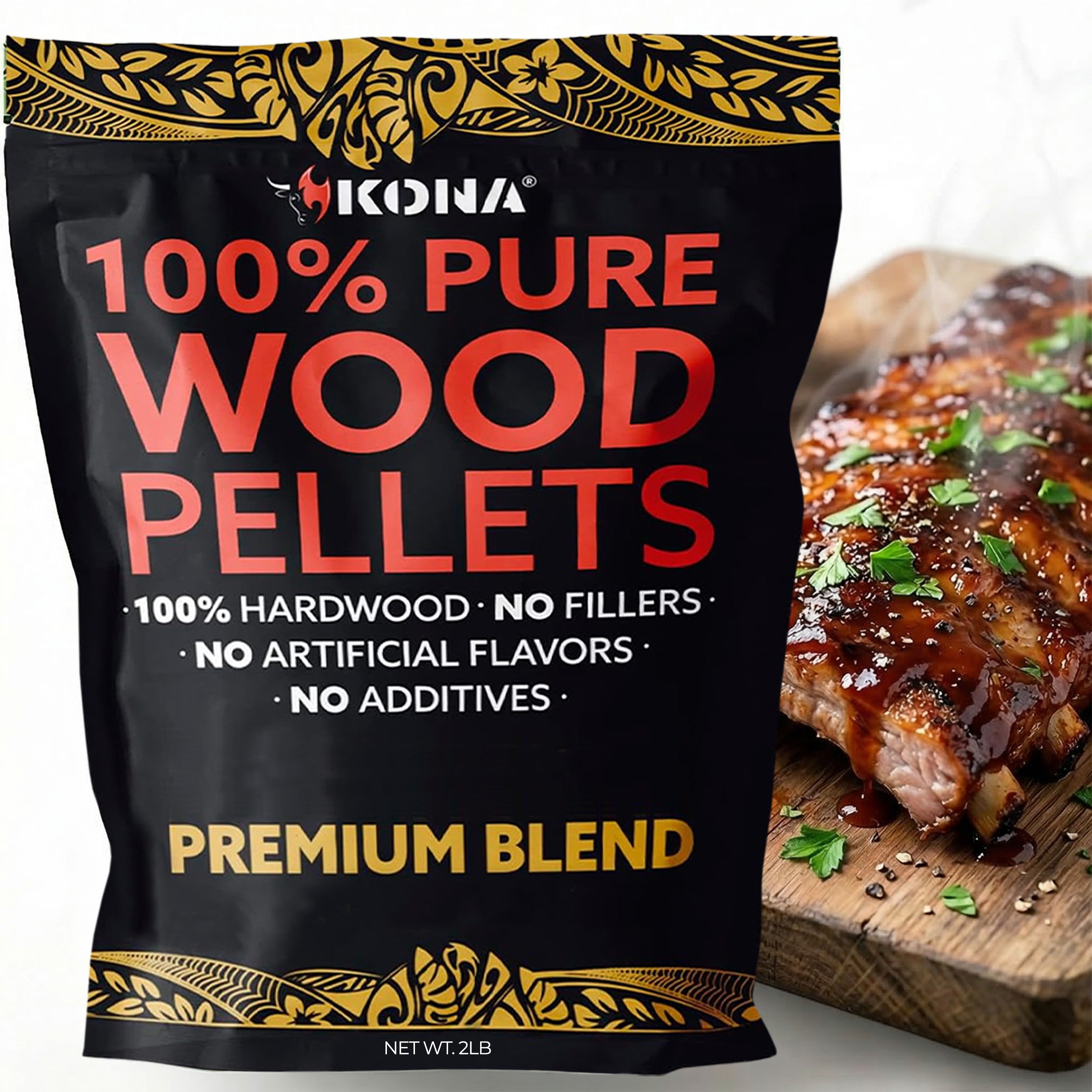
A turkey sits on the smoker for hours, and that's exactly where cheap wood shows itself. A lot of pellets are sprayed sawdust or milled from young trees with little real flavor, and over a long cook that thin, acrid smoke ends up all over the bird. Kona pellets are pressed from mature hardwood that carries clean, true flavor. Wood should be wood.
The best woods for turkey
Apple or cherry: the backbone
Fruit wood is the classic turkey choice for a reason. Apple is mild and a little sweet and never overpowers the bird. Cherry adds a touch more depth and gives the skin a gorgeous mahogany color. For most turkeys, one of these is all you need. Our 100% Apple and 100% Cherry are both holiday staples.
Hickory: a little, for depth
If you want a more pronounced smoky flavor, add a small amount of hickory to your fruit wood. Keep it a supporting note, not the lead. Too much hickory on a long turkey cook turns harsh. Our 100% Hickory works well used with a light hand.
The easy route
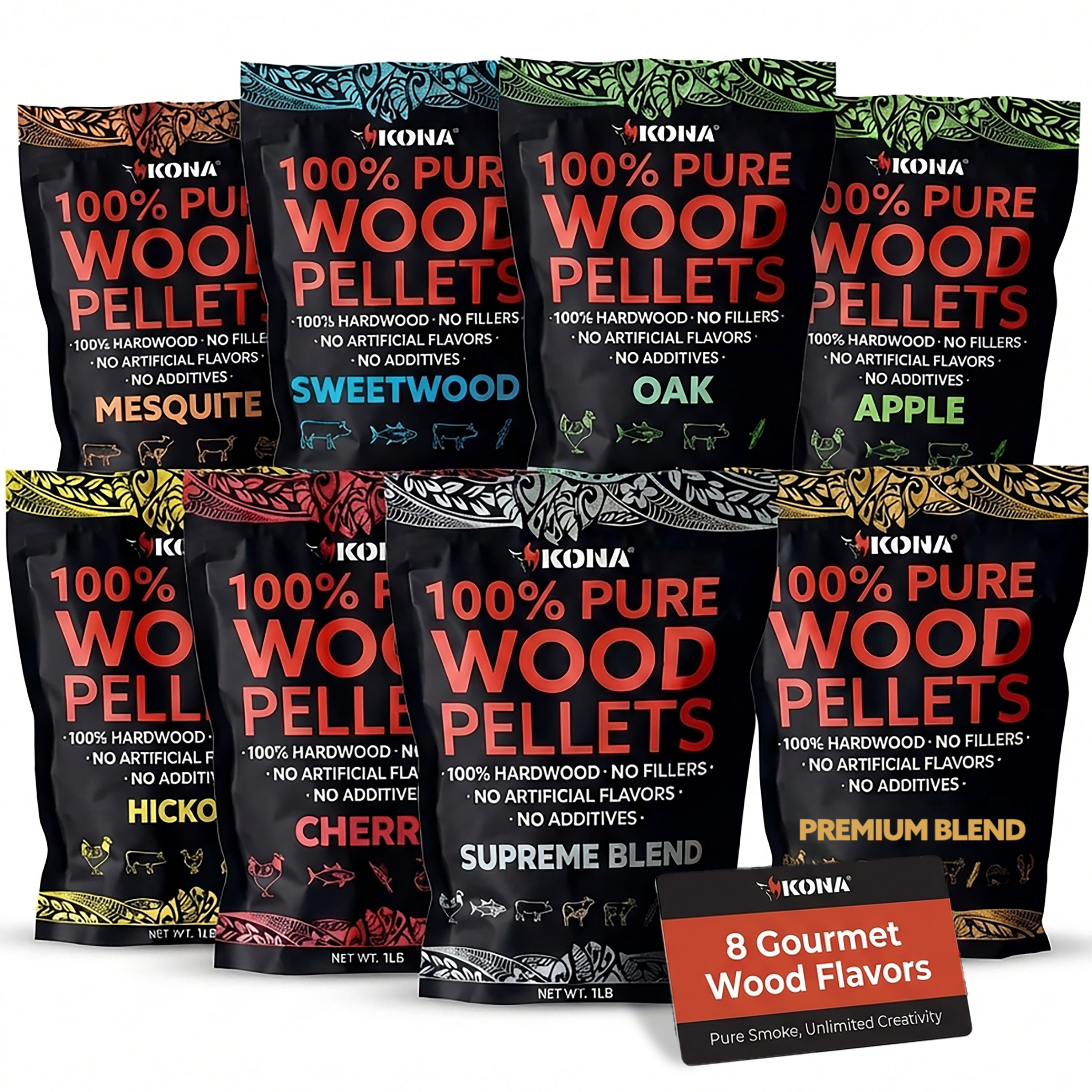
If you'd rather keep it simple, our Premium Blend or the 8-Flavor Variety Pack both give you a balanced, crowd-pleasing smoke that suits turkey with no guesswork.
How to smoke a turkey
Brine it. Turkey is lean and dries out easily. A wet or dry brine keeps it juicy and seasons it through. This step matters more than the wood.
Smoke a little hotter than brisket. Poultry does best around 275 to 325°F. That carries the bird through the temperature danger zone safely and crisps the skin, which low and slow won't do.
Cook to temperature. Pull the turkey when the breast reaches 165°F and the thigh is around 175°F. Use a thermometer, not the clock.
Consider spatchcocking. Removing the backbone and flattening the bird cooks it faster and more evenly, and exposes more skin to the smoke.
Don't over-smoke. One or two charges of a mild wood is plenty. You don't need to keep feeding smoke the entire cook.
Explore more
Frequently asked questions
What is the best wood for smoking turkey?
Mild fruit woods like apple and cherry are the most popular and reliable. They add flavor and color without overpowering the bird. A little hickory mixed in adds depth if you want more smoke. Avoid heavy woods like mesquite, which can overpower turkey.
Is apple or hickory better for turkey?
Apple is the safer default: mild, sweet, and forgiving over a long cook. Hickory is bolder and best used in small amounts as an accent, not the main wood. Many cooks use apple or cherry as the base with just a touch of hickory.
What temperature do you smoke a turkey at?
Smoke turkey hotter than brisket, around 275 to 325°F. That carries the bird safely through the temperature danger zone and crisps the skin. Pull it when the breast hits 165°F and the thigh is about 175°F.
How long does it take to smoke a turkey?
It depends on size and temperature, but at 275 to 325°F plan for roughly 30 to 40 minutes per pound, less if you spatchcock. Always cook to internal temperature rather than time.
Can you over-smoke a turkey?
Yes. A turkey is on the smoker for hours, so a heavy wood or constant smoke can build into a bitter, acrid flavor. Use a mild wood and don't feel like you need to keep feeding smoke the whole cook.