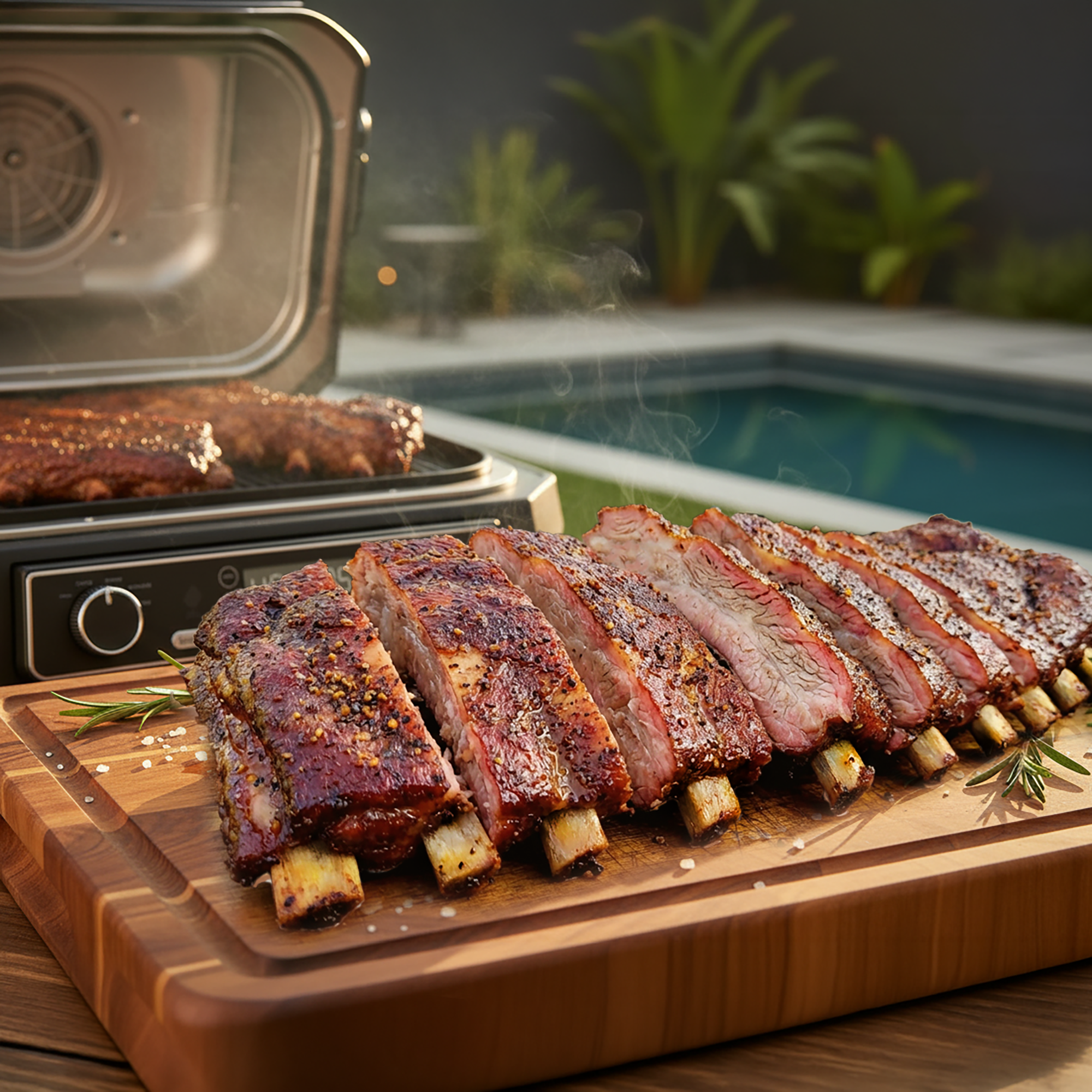
Ribs are a shorter cook than brisket, usually five or six hours, not twelve. That changes the whole pellet decision. You're not picking a wood that can survive a marathon. You're picking one that pairs with a sugary rub and gives you flavor and color in a tighter window. Most people grab hickory on instinct here. It's a fine choice, but it's rarely the best one.
Where fruit wood earns its keep
Here's my honest take after a lot of racks. On ribs, a fruit wood beats straight hickory more often than not. The reason is the rub. Ribs almost always carry a sweet, sugary rub, and a sweeter smoke from apple or cherry works with that sugar instead of fighting it. Hickory is bolder and a little savory, which is great, but lean on it too hard and it starts to bully the sweetness you worked to build.
That doesn't mean skip hickory. It means use it as a partner, not the whole show.
Start with the wood, not the bag
A quick word before flavors, because it matters more than which fruit wood you pick. A rib cook is short enough that cheap pellets can fake it for an hour or two, but you'll still taste the difference. A lot of pellets on the shelf are sprayed sawdust or wood milled from young trees that never built real flavor. Kona pellets are pressed from mature hardwood with the heartwood and lignin that actually carry flavor. Wood should be wood. Get that part right and the flavor pairing below actually means something.
The best woods for ribs
Apple or cherry: the sweet backbone
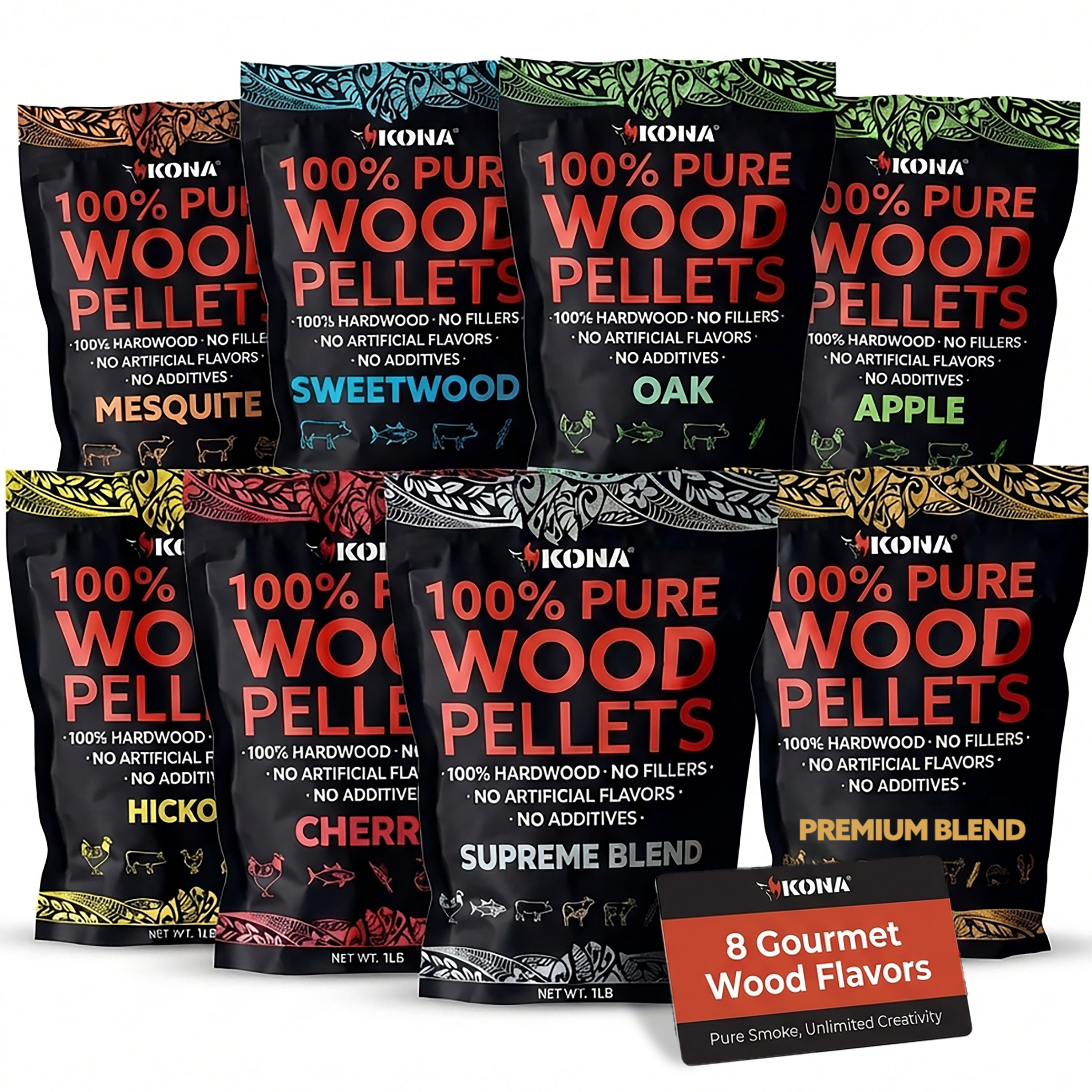
This is where I'd start for almost any rack. Apple is mild and sweet and lets the rub shine. Cherry is a touch deeper and gives ribs a beautiful mahogany color that makes them look as good as they taste. Either one is a great everyday rib wood. Our 100% Apple and 100% Cherry are both built for exactly this.
Hickory: for the classic punch
Want that unmistakable old-school barbecue flavor? Add hickory. Just don't let it run the whole cook on a rack, and keep the smoke clean and thin so it doesn't tip bitter. A little goes a long way. Our 100% Hickory is the one to reach for when you want more depth.
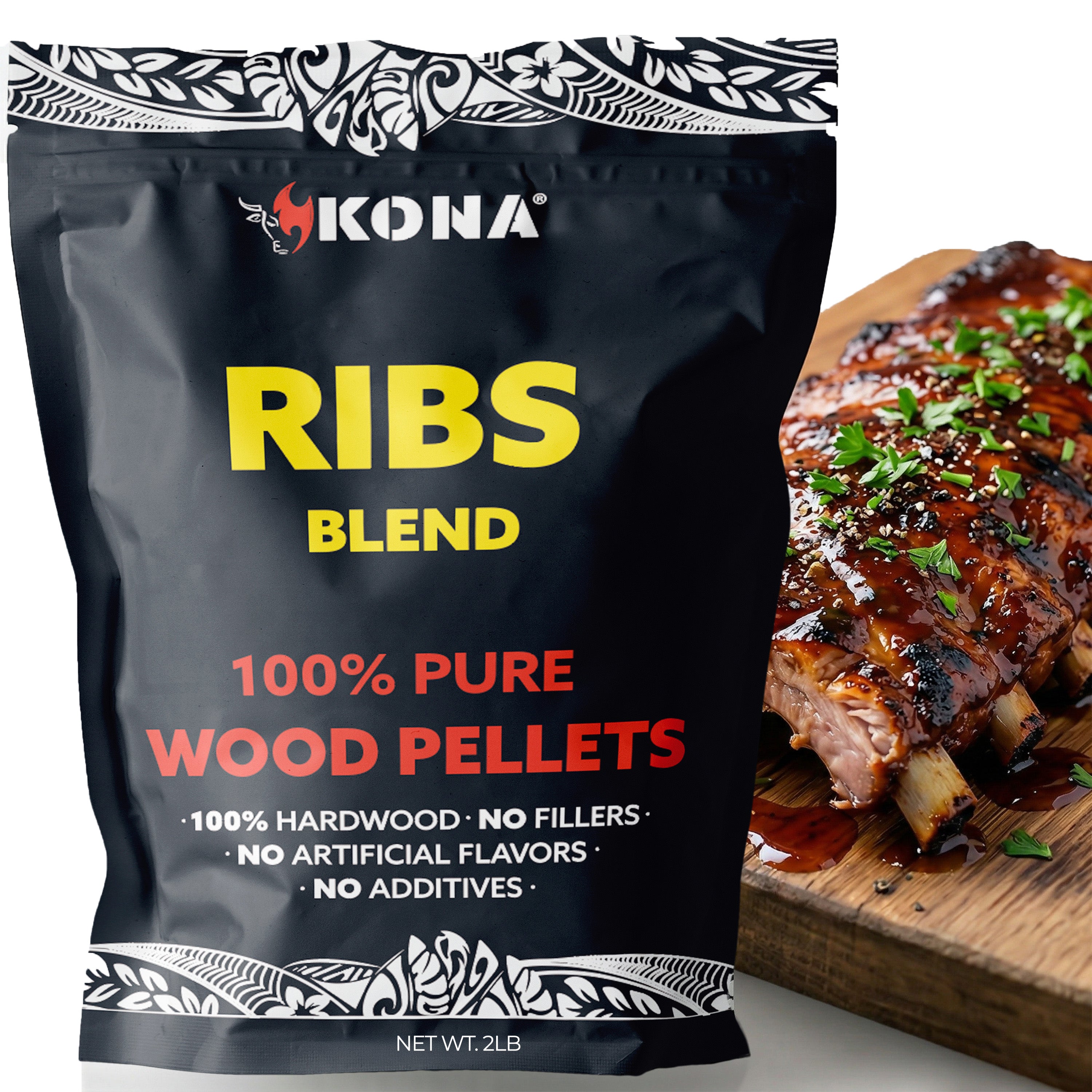
The Ribs Blend: the done-for-you pick
If you'd rather not think about ratios, we built a blend for this cut. Our Ribs Blend pairs a sweeter base with just enough bold wood to give the bark some backbone. It's the shortcut to a great rack without playing blendmaster.
My simple rib strategy
Run a fruit wood as your base, apple or cherry, and add a touch of hickory for depth. That's it. Sweet smoke to work with the rub, a little bold wood for that classic barbecue note, clean smoke throughout. If you want the easy button, the Ribs Blend does this for you in one bag.
How to run the cook
Cook to feel, not just the clock. The popular 3-2-1 method (3 hours smoke, 2 wrapped, 1 saucing) is a fine starting framework for spare ribs, but treat it as a guide, not a law. Baby backs usually want less time.
Watch for the bend. Ribs are done when you lift the rack and it bends and cracks slightly on the surface, somewhere around 195 to 203°F internal between the bones. Trust your eyes and a probe over a stopwatch.
Keep the smoke clean. Thin and blue, not thick and white. On a shorter cook it's tempting to crank the smoke, but dirty smoke turns ribs bitter fast. Less smoke, more flavor.
Smoke low and steady. Around 225 to 250°F is the sweet spot for ribs.
Explore more
Frequently asked questions
What is the best wood pellet for ribs?
A sweet fruit wood like apple or cherry is the best all-around choice, because it pairs with the sugary rub most ribs carry. Cherry also gives a deep mahogany color. For more classic barbecue punch, add a little hickory, or use a purpose-built ribs blend that balances both.
Should you use hickory or apple for ribs?
Apple is the safer everyday pick because it's sweet and won't overpower the rub. Hickory is bolder and gives a more traditional barbecue flavor, but it's easy to overdo on a shorter cook like ribs. Many cooks use apple or cherry as the base and add a touch of hickory for depth.
Can you mix wood pellets for ribs?
Yes, and it's a great approach for ribs. A fruit-wood base with a little hickory gives you sweet smoke that works with the rub plus a bold barbecue note. A ready-made ribs blend does this mixing for you if you'd rather not measure.
What temperature do you smoke ribs at?
Smoke ribs low and steady, around 225 to 250°F. Cook to feel rather than strictly by time. Ribs are usually done when the rack bends and cracks slightly and the meat reads roughly 195 to 203°F between the bones.
How long do ribs take to smoke?
Spare ribs usually take around five to six hours and baby backs a bit less, but it varies with your smoker and the racks. Use the bend test and internal feel to call doneness rather than relying on the clock alone.