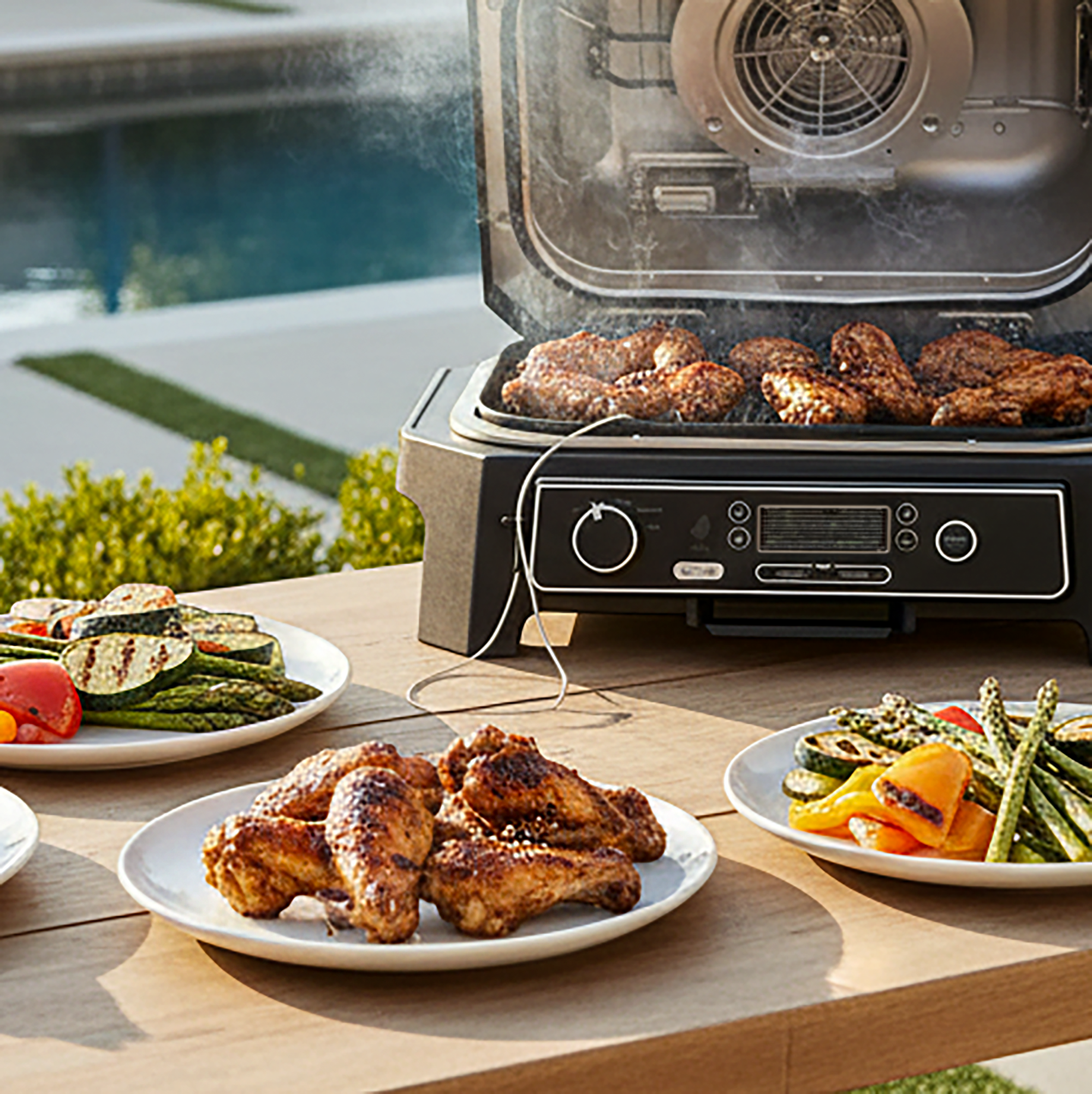
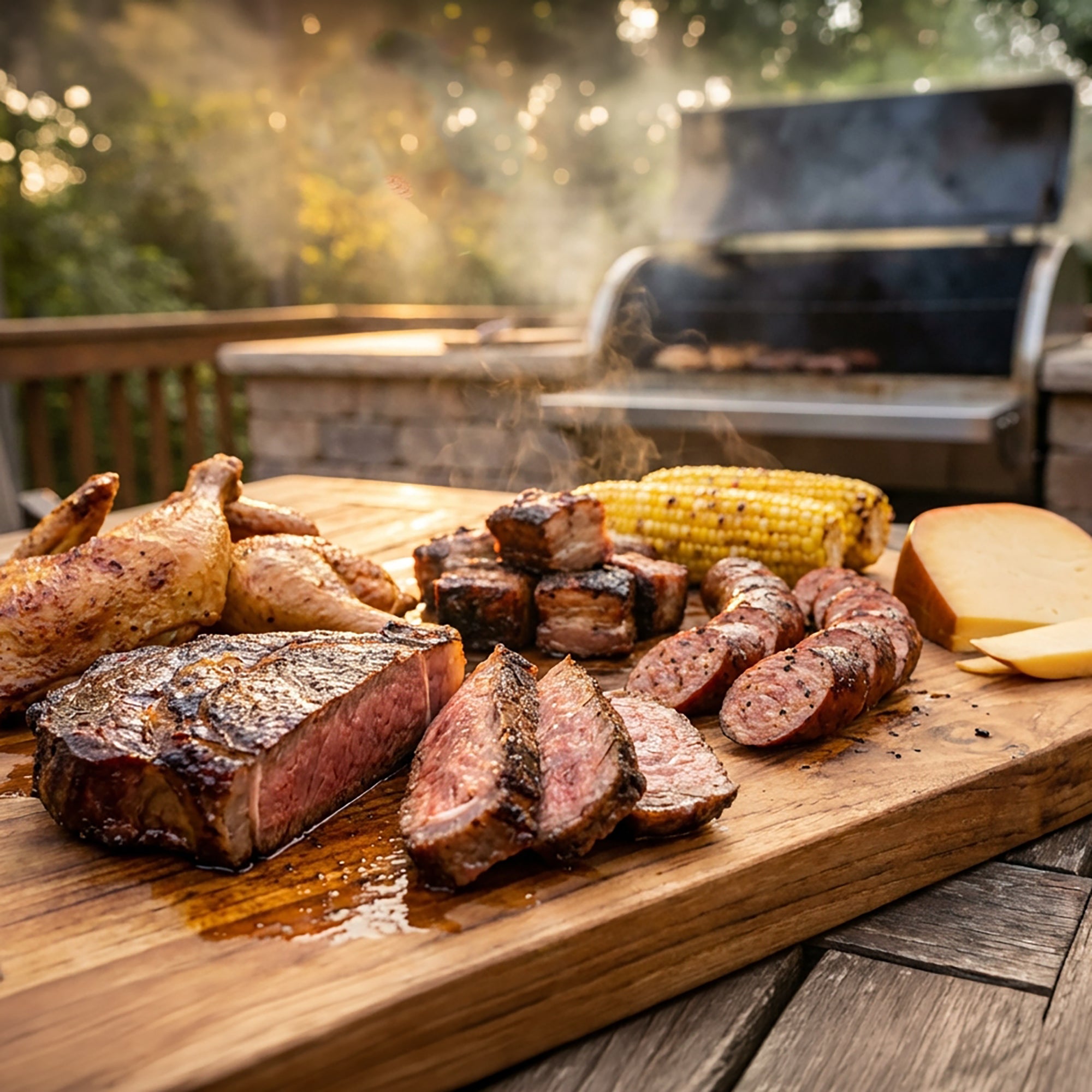
Chicken is the cut people over-smoke more than any other. It takes on smoke fast, the skin turns bitter if you push it, and a heavy wood will bury the bird instead of flattering it. So the move with chicken is restraint: a lighter, sweeter smoke that lets the chicken stay the star. Here's how to pick the right pellets and not overdo it.
Start with the wood, not the bag
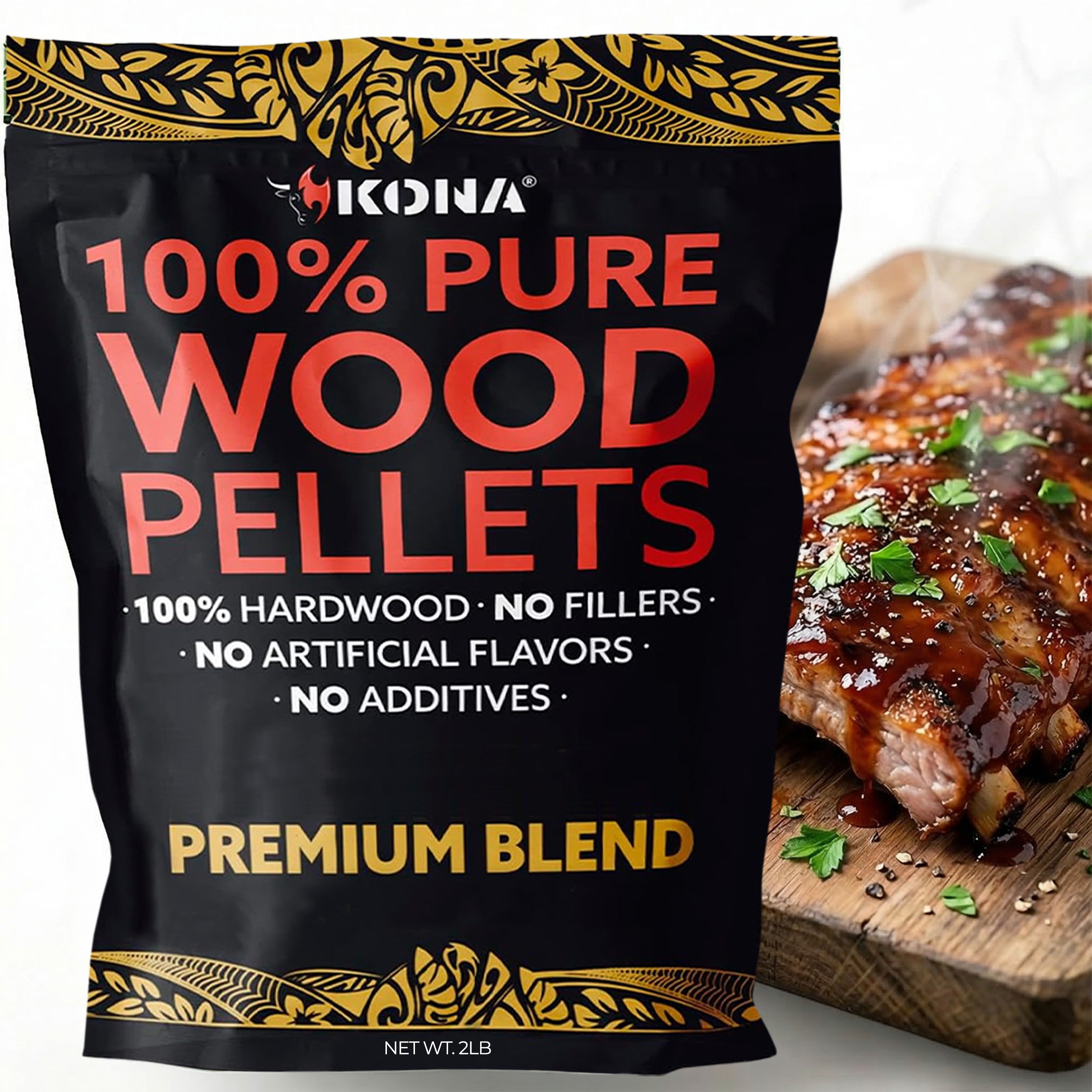
Before flavor, a quick word on quality, because it matters more than which fruit wood you grab. A lot of pellets on the shelf are sprayed sawdust, or wood milled from young trees that never built real flavor. Kona pellets are pressed from mature hardwood with the heartwood and lignin that actually carry flavor. Wood should be wood. Get that right and the pairing below means something.
The best woods for chicken
Apple: the everyday default
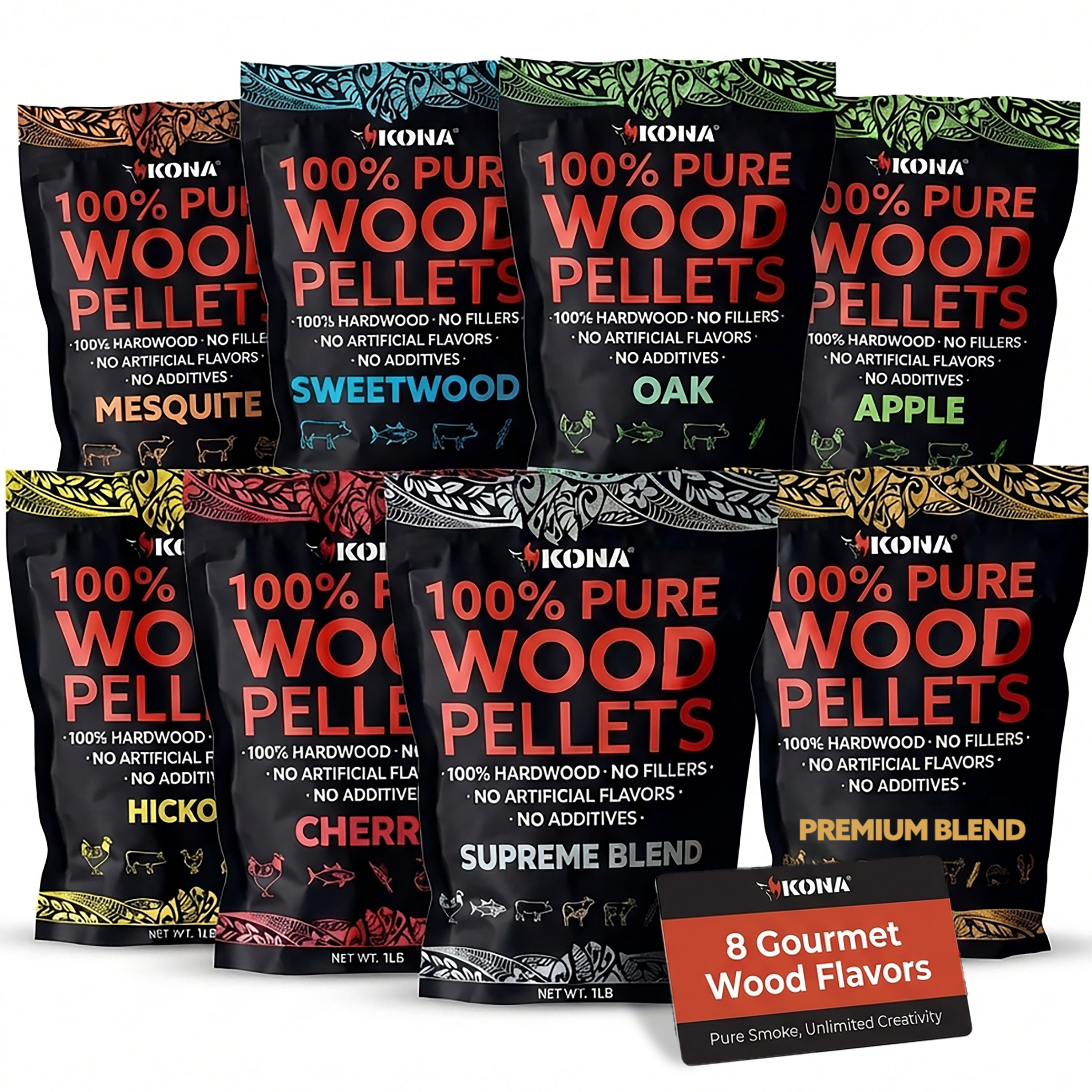
If I had to pick one wood for chicken, it's apple. Mild, a little sweet, and it never fights the bird. It's almost impossible to overdo, which is exactly what you want on something that takes smoke as fast as chicken. Our 100% Apple is the one to reach for most nights.
Cherry: a touch deeper, great color
Cherry is a step up in depth from apple and gives chicken a beautiful mahogany color that makes it look as good as it tastes. Run it on its own or pair it with apple. Our 100% Cherry is a favorite for skin-on birds.
The Wings Blend: built for poultry
If you're cooking wings or a whole bird and want a blend dialed in for poultry, we made one. Our Wings Blend pairs a sweet base with just enough backbone for crispy, smoky skin without going heavy.
Hickory: only in moderation
You can use hickory on chicken, but treat it like seasoning, not the main event. A little adds a classic barbecue note. Too much turns the skin acrid. If you go this route, keep the smoke clean and don't overload the hopper. Our 100% Hickory works if you want more punch, used with a light hand.
How to smoke chicken without ruining it
Go light on the smoke. Chicken takes smoke faster than almost anything. One charge of a mild wood is usually plenty. More wood isn't more flavor here, it's bitterness.
Wait for clean smoke. Thin and blue, not thick and white. Dirty smoke and chicken skin are a bad combination.
Cook to temperature. Pull chicken at 165°F in the breast and around 175°F in the thigh. Trust your thermometer over the clock.
Mind the skin. If you want it crispy, finish over higher heat. Low and slow alone leaves the skin rubbery.
Explore more
Frequently asked questions
What type of wood is best for smoking chicken?
Apple is the most reliable all-around choice: mild, slightly sweet, and forgiving. Cherry is great for color and a little more depth. A poultry-focused blend works well too. The key is keeping the smoke light so it doesn't overpower the bird.
Is apple or cherry better for chicken?
Both are excellent. Apple is milder and the safer default. Cherry is a little deeper and gives better color. Many cooks use them together. Either one beats a heavy wood like hickory or mesquite on chicken.
Can you over-smoke chicken?
Yes, easily. Chicken absorbs smoke faster than most meats, and the skin turns bitter if you overdo it. Use a mild wood, keep the smoke clean and thin, and don't overload the hopper.
What temperature is smoked chicken done at?
Pull chicken at 165°F in the breast and about 175°F in the thigh. Cook to temperature, not time, and use a thermometer. For crispy skin, finish over higher heat.
What wood do restaurants use for smoked chicken?
Most lean on mild fruit woods like apple and cherry, sometimes with a little hickory or oak for backbone. The common thread is a lighter smoke that complements the chicken rather than overpowering it.