Pork is the most forgiving meat to smoke, and one of the most rewarding. It takes a fuller smoke than chicken without turning bitter, and a big pork shoulder will drink up flavor over a long cook. That makes the wood choice fun: you've got room to go bolder, and a couple of woods that are tough to beat.
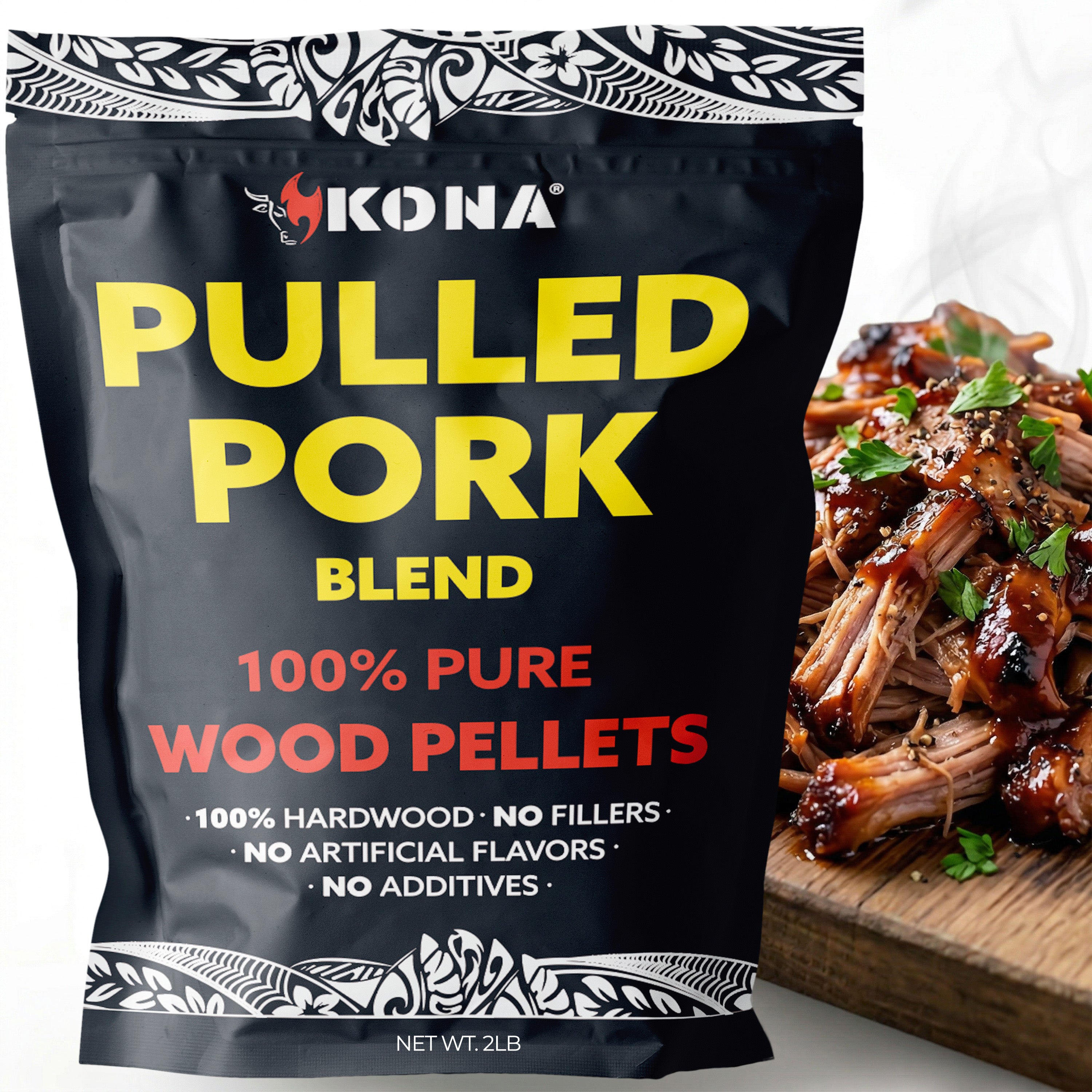
In a hurry? Our pick for pork is the Kona Pulled Pork Blend. Bold hickory backbone, sweeter fruit-wood base, built for exactly this cook. Grab it in the grid just below, or read on if you'd rather blend your own.
Start with the wood, not the bag
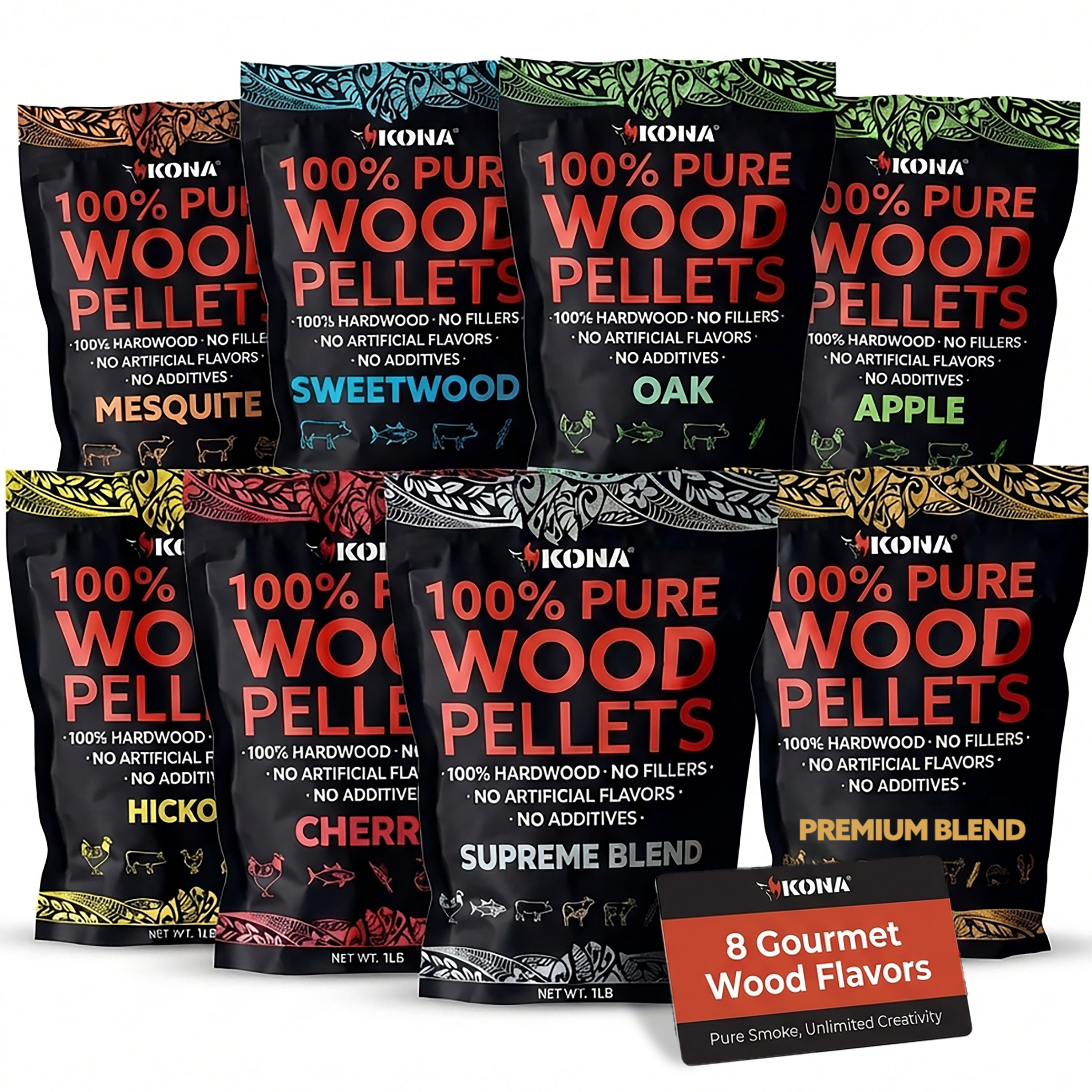
Before flavor, a quick word on quality. A long pork cook exposes cheap wood fast. A lot of pellets are sprayed sawdust or milled from young trees that never built real flavor, and over hours that thin smoke shows up in the bark. Kona pellets are pressed from mature hardwood with the heartwood and lignin that carry flavor through a long burn. Wood should be wood.
The best woods for pork
Hickory: the backbone
Hickory is the classic pork wood. Its bold, bacon-forward smoke is exactly what people picture when they think pulled pork or ribs. It stands up to a long cook and gives pork that deep, smoky barbecue flavor. Our 100% Hickory is the one to build around.
Apple or cherry: the sweet partner
Pork and fruit wood are a natural match. Apple is mild and sweet, cherry adds depth and color. On their own they're great for a lighter pork cook. Paired with hickory, they round off the edges and add a sweetness that works beautifully with pork's richness. Our 100% Apple and 100% Cherry both do this well.
The Pulled Pork Blend: the done-for-you pick
If you'd rather not blend, we built one for this exact cook. Our Pulled Pork Blend pairs a bold backbone with a sweeter base, so a pork shoulder comes out deep, smoky, and balanced without you playing blendmaster.
My simple pork strategy
Run hickory as your base and add a little apple or cherry for sweetness and color. That combination is hard to beat on a pork shoulder. If you want the easy button, the Pulled Pork Blend does it in one bag.
How to run a pork shoulder
Low and slow. Around 225 to 250°F. Pork shoulder is full of collagen and needs time for the connective tissue to break down.
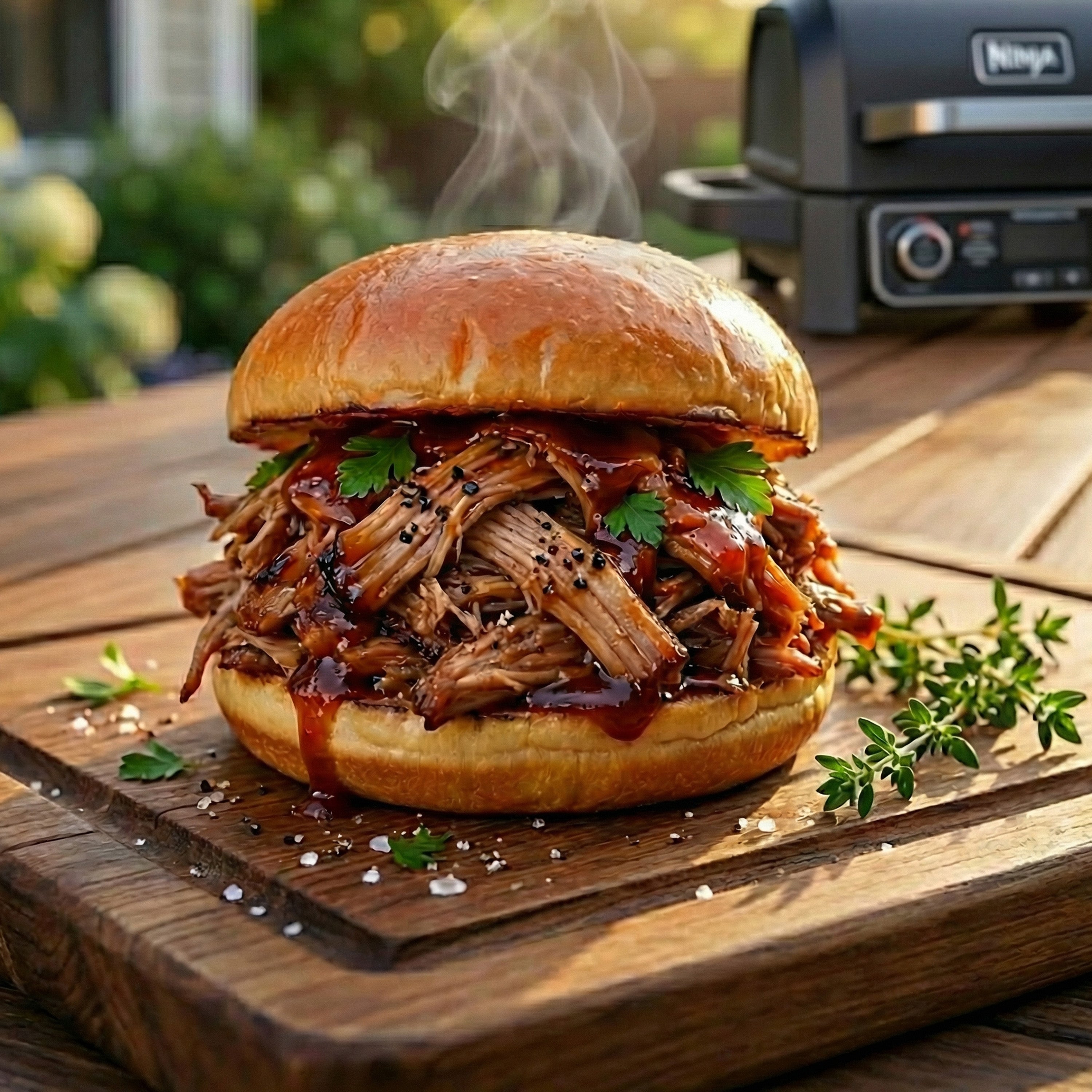
Pull it at the right temp. For pulled pork, take it to about 200 to 205°F internal, when a probe slides in like butter. That's when it shreds.
Wrap to push through the stall. Around 160 to 170°F the temperature stalls for a while as the meat sweats. Wrapping in foil or butcher paper speeds it up.
Rest it. Give it at least 30 to 60 minutes before you pull. The rest matters as much as the cook.
Explore more
Frequently asked questions
What is the best wood for smoking pork?
Hickory is the classic backbone for pork: bold and bacon-forward, and it holds up over a long cook. Fruit woods like apple and cherry add sweetness and color. The most popular approach is hickory as the base with a little fruit wood. A purpose-built pulled pork blend handles that mix for you.
Is hickory or apple better for pulled pork?
They do different jobs. Hickory gives the deep, smoky barbecue backbone most people want in pulled pork. Apple adds sweetness and lightens it. Many cooks use both: hickory as the base, apple for balance.
What temperature do you smoke a pork shoulder to?
For pulled pork, take the shoulder to about 200 to 205°F internal, when a probe slides in with almost no resistance. Smoke low and slow at 225 to 250°F to get there, and rest it before pulling.
How long does it take to smoke a pork butt?
It varies with size and your smoker, but a pork shoulder is a long cook, often well over an hour per pound at 225 to 250°F. Cook to internal temperature, not time, and plan for a stall around 160 to 170°F that wrapping can speed through.
Can you mix woods for pork?
Yes, and it's a great approach. A hickory base with a little apple or cherry gives you bold smoke plus sweetness and color. A ready-made pulled pork blend does the mixing for you if you'd rather not measure.