Reusable Ice Packs vs Loose Ice
Reusable ice packs vs loose ice is a fight I've watched play out in a hundred cooler lids, and the ice usually loses. A 10 lb bag costs about $3, melts inside a day, and leaves your food floating in gray water. A good gel pack costs more up front, then shows up for work every weekend for years. Here's the honest breakdown, including the one job where loose ice still wins.
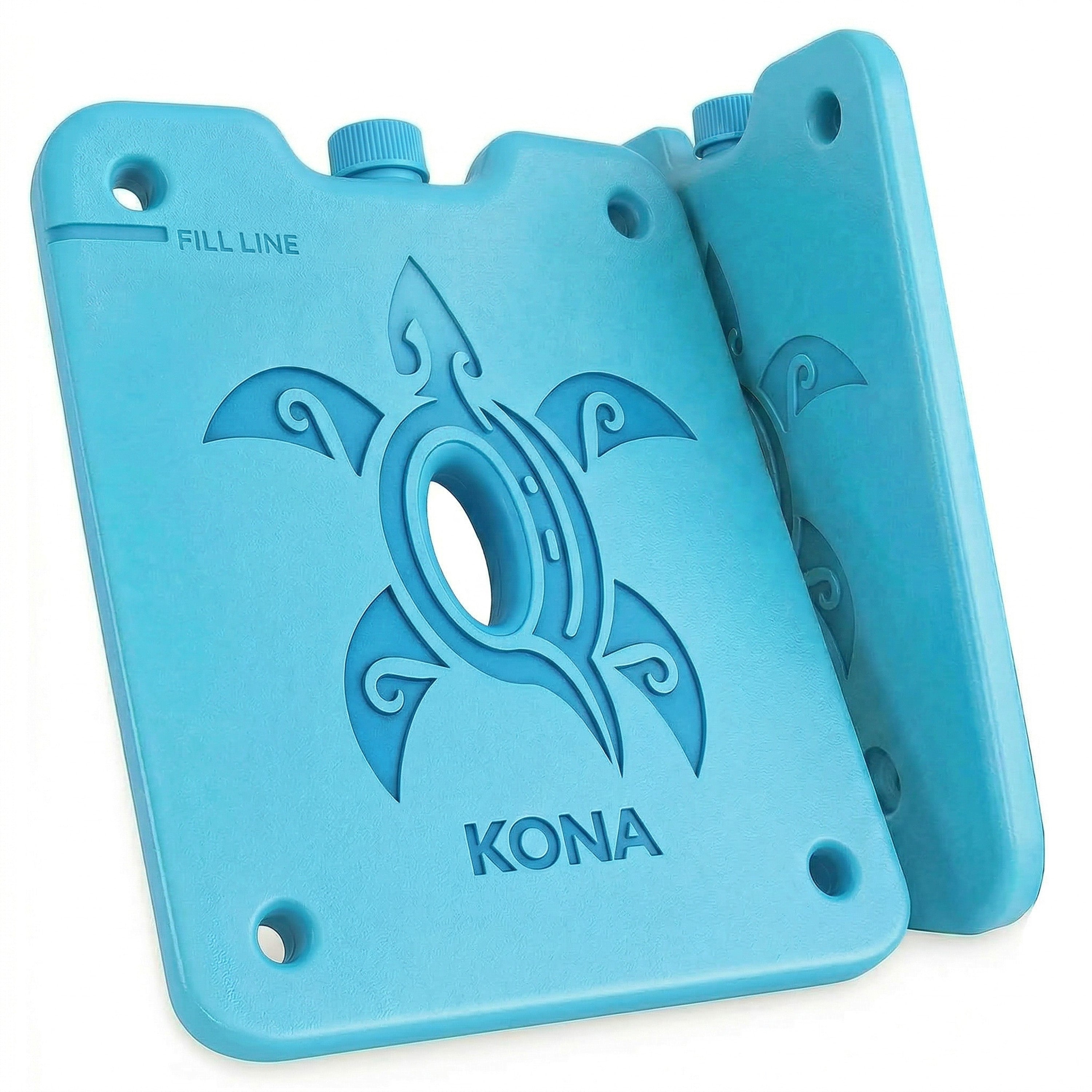
In a hurry? Our pick for replacing bagged ice is the Kona Blue Heavy Duty 2 lb Ice Packs (2-pack). Dense -5°C gel blocks that do the job of a bag of ice without the puddle. Grab a set in the grid below, then read the full comparison.
What loose ice actually costs you
Loose ice looks cheap because you buy it $3 at a time. Run the season's math and it flips. Two bags per weekend trip from May through September is about 40 bags. That's $120 a year, every year, for cold you pour on the ground Sunday night.
The bigger cost is the meltwater. Ice starts melting the moment it leaves the store freezer, and by hour 12 your cooler is a pool with labels, soggy buns, and raw-chicken juice all swimming in it together. Food safety folks call that cross-contamination. I call it the reason my dad's old cooler always smelled like regret.
And melted ice can't be un-melted at the tailgate, the campsite, or the beach. When it's gone, it's gone, and somebody's making a store run in a wet swimsuit.
How we build our packs, and why it matters here
Ten years formulating paint as a polymer chemist taught me one thing that transfers straight to coolers: the raw material inside decides the finished product. So the gel inside a Kona pack is the whole game. Our heavy-duty packs freeze at -5°C. Plain water ice sits at 0°C. A colder core releases cold longer, which is why a frozen 2 lb block is still doing its job when a bag of cubes has already turned into soup.
The other thing we did on purpose: most of our heavy-duty packs ship dry. You fill them once with tap water at home, freeze, and go. You're not paying anyone to truck frozen water across the country. Which, if you think about it, is exactly what every bag of ice is.
Where each one wins
Holding cold: packs
Pound for pound, a -5°C gel block out-lasts cubed ice by a wide margin. Cubes have huge surface area, which is great for chilling fast and terrible for lasting long. A dense block gives up its cold slowly, a full day or more per block in a decent pre-chilled cooler.
Keeping food dry: packs, and it's not close
A gel pack at the end of a trip is just a cool, dry brick. Loose ice at the end of a trip is two gallons of water with your dinner in it. If you've ever fished a zip bag of marinating chicken out of the bottom of an ice bath and hoped the seal held, you know which side of this argument you're on.
Cost over a season: packs
A 2-pack of our 2 lb blocks is $24.95, once. Forty bags of ice is about $120, every single season. The packs pay for themselves by roughly the fifth trip and then keep working for years.
Chilling drinks fast: loose ice, and I'll happily say so
Here's my real opinion, and plenty of ice pack sellers won't give it to you. For a party tub of warm cans, loose ice wins. All that surface area wraps every can and pulls them cold in 20 to 30 minutes, and nobody cares that it melts because the tub drains. Ice packs are for keeping cold things cold, especially food. Loose ice is for making warm drinks cold in a hurry. Use each for what it's good at.
The Kona packs that do the replacing
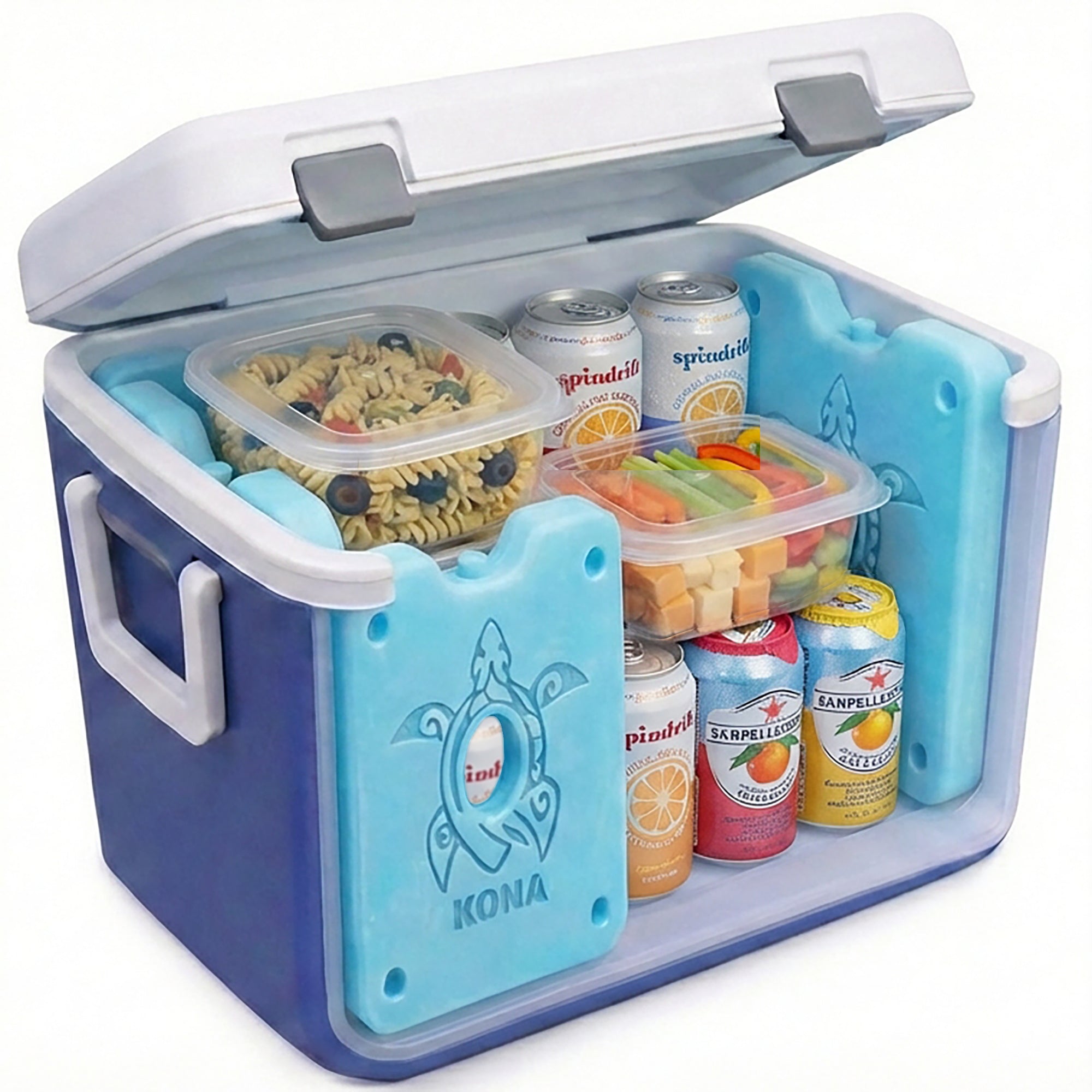
The blue 2 lb heavy duty packs and black 2 lb heavy duty packs are the direct bag-of-ice replacement. Two blocks on the bottom of a weekend cooler cover what a 10 lb bag used to do, minus the swamp.
The XXL slim space-saving packs are the layer ice never gave you. 13" x 10" and only 0.4" thick, they lie flat over the food like a lid of cold and steal almost no room from the stuff you actually want to pack.
For big coolers and long weekends, the blue XL 4 lb blocks are the deep reserve. One of these is the thermal battery a multi-day cooler runs on.
The XL turtle-design packs do serious cooler coverage while being the pack your kids can spot as theirs. And the slim lunch box packs handle the place loose ice never worked at all: a lunch bag, where a sandwich sitting on wet cubes was always a bad idea.
How to make the switch
Count your bags. If a normal trip takes two 10 lb bags, start with two 2 lb blocks for the bottom and one XXL slim for the top. Add a 4 lb XL block per extra day past the weekend.
Freeze them solid. Give the 2 lb and 4 lb blocks a full 24 hours in the freezer. The slims refreeze in about 25 minutes, so they're the easy ones to keep in rotation.
Pre-chill the cooler. A cooler that starts warm burns its first hours cooling itself instead of your food. Toss a spare pack in the night before, or at least bring the cooler inside.
Run the hybrid at parties. Food cooler gets packs and stays dry. Drink tub gets the bag of ice. Everybody's happy, nothing floats.
Explore more
- All Kona Reusable Ice Packs
- Ice Packs for Coolers
- Best Ice Packs for Camping
- Ice Packs for Lunch Boxes
Frequently asked questions
Are reusable ice packs cheaper than buying ice?
Over a season, yes. A 10 lb bag runs about $3 and lasts one trip, so 40 trips a year is roughly $120 gone. A set of reusable gel packs costs $25 to $35 once and refreezes for years of trips. Regular users usually break even by about the fifth outing.
Do reusable ice packs keep food as cold as ice?
A quality gel pack holds food-safe cold as well as ice and usually longer. Kona's heavy-duty packs freeze at -5°C, colder than water ice at 0°C, and release that cold more slowly. The catch is they need to be frozen solid first, a full 24 hours for the 2 lb blocks.
Can you mix ice packs and loose ice in the same cooler?
You can, and for drinks it's actually the best setup. Packs on the bottom handle the long-haul cooling while a layer of loose ice gives cans that instant surface chill. For a food cooler, skip the loose ice entirely and keep everything dry.
How many ice packs does it take to replace a bag of ice?
Two 2 lb gel blocks plus one slim top-layer pack roughly cover what a 10 lb bag does in a weekend cooler, without the meltwater. Larger coolers or longer trips scale up from there. A 4 lb XL block per extra day is a good rule of thumb.
Why is loose ice a problem in a cooler full of food?
It melts fast and turns the cooler into standing water that soaks labels, buns, and packaging. If raw meat is in there, that water can spread it around, which is a cross-contamination risk. Gel packs deliver the same cold and the cooler stays dry.
Sort by
6 products