Loose ice is the worst thing you can put in a camping cooler. There, I said it. It melts by day two, soaks your food in gray water, and there's no way to make more at a campsite. Reusable ice packs flip every one of those problems: they hold cold longer pound for pound, they never turn your bacon into a wet sponge, and when the trip's over you just toss them back in the freezer. Here's how to build a cooler that's still cold on day three.
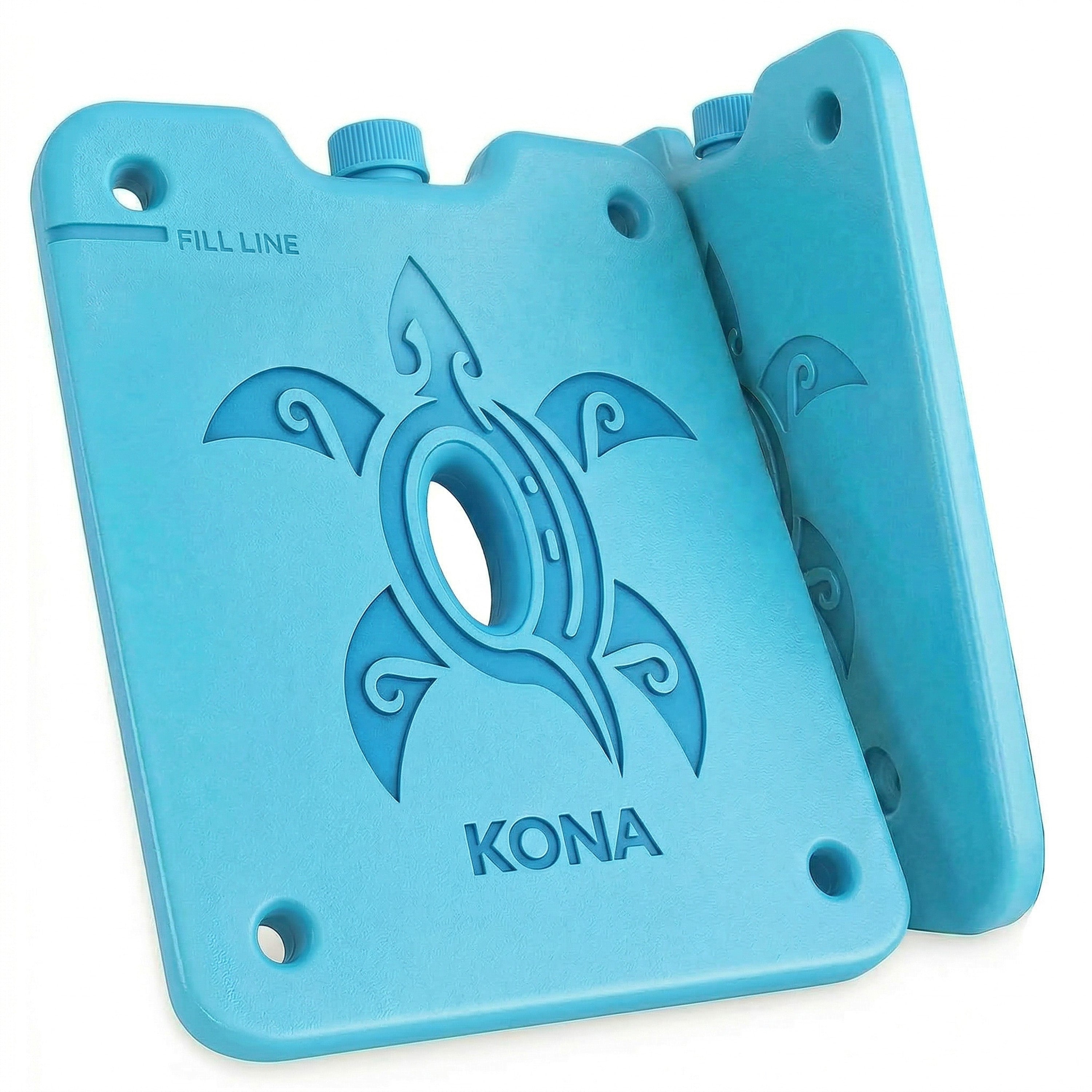
In a hurry? Our pick for camping is the Kona XXL Slim Ice Packs (2-pack). Big cooling surface, almost no space stolen from food. Grab them in the grid below, then read how to layer the rest.
The two-layer camping setup
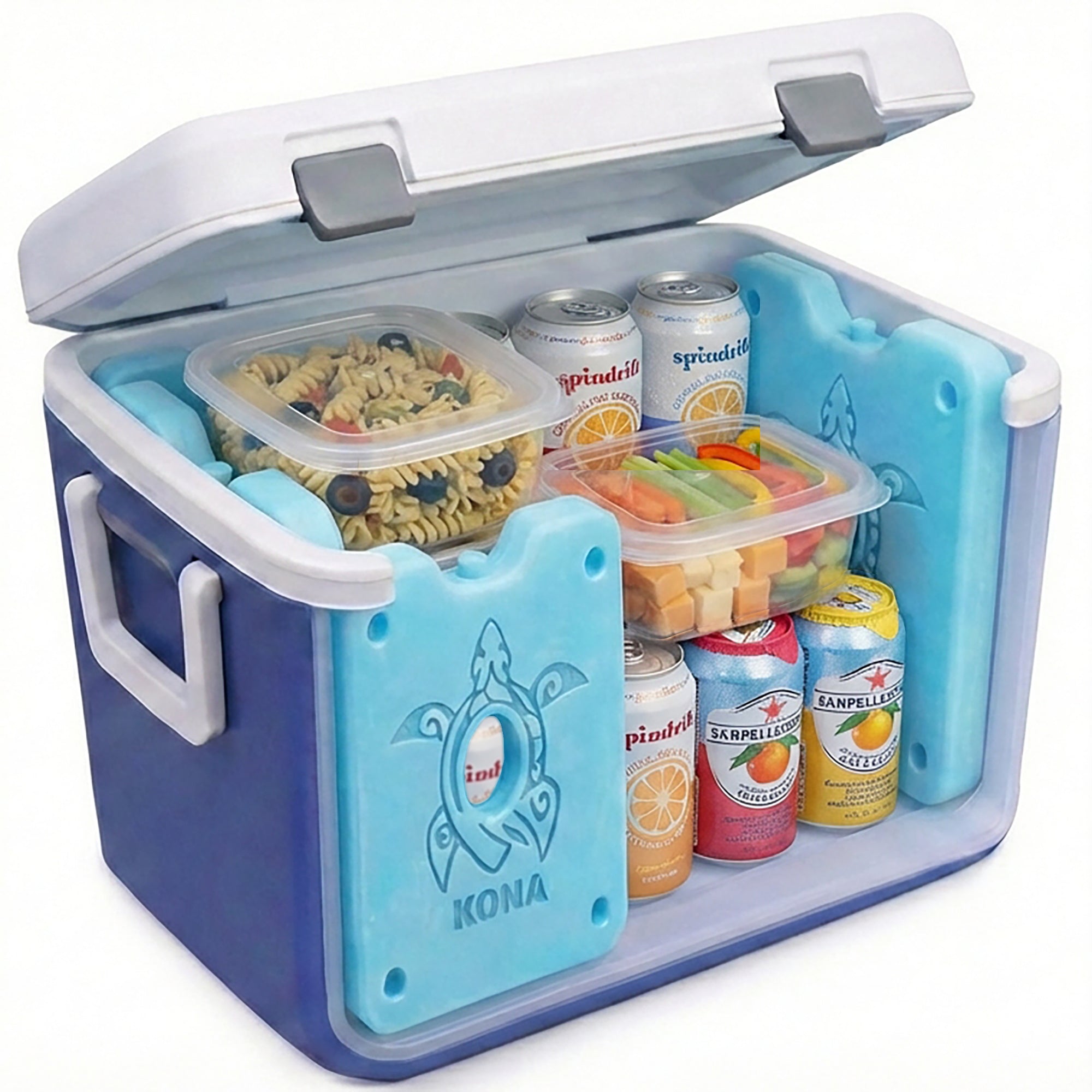
The mistake most campers make is tossing a couple of packs on top and hoping. Cold sinks, warmth rises, and a cooler opened 20 times a day needs cold coming from more than one direction. The setup that works:
-
Bottom layer: dense 2 lb blocks. They're the thermal battery of the cooler and thaw the slowest.
-
Top layer: an XXL slim sheet, 13" x 10" and only 0.4" thick. It lies flat over the food like a lid of cold and catches the warm air that pours in every time someone grabs a drink.
-
The gaps: a full cooler holds cold far longer than a half-empty one. Fill dead space with whatever's coldest, even a frozen water bottle.
The packs to bring
XXL Slim Space-Saving Packs: the top layer
The XXL slim packs are the ones campers end up buying twice, once they see how little room they take. Big cooling surface, almost zero volume stolen from food space.
Blue and Black 2 lb Heavy Duty Packs: the base
These are the workhorses. The blue 2 lb packs and black 2 lb packs run a -5°C gel that stays cold well below what a frozen water bottle manages. Two on the bottom of a weekend cooler is the right starting dose.
XL Turtle Packs: the fun ones that still work
The XL turtle-design packs pull double duty: serious cooler coverage on the trip, and the pack your kids actually recognize as theirs at the campsite.
Small TSA-Compliant Packs: for the day hikes
Base camp is only half the trip. A set of small slim packs keeps sandwiches and snacks cold in a daypack while the cooler stays shut back at the site. Fewer cooler openings, longer cold. Everything wins.
Getting the most out of them
Freeze everything solid. Give the 2 lb blocks a full 24 hours in the freezer. The slims freeze fast, but do them the night before anyway.
Pre-chill the cooler. A cooler that starts warm spends its first day cooling itself instead of your food.
Freeze what you can. Meat for night two and three should go in frozen. It thaws slowly in the cooler and acts as extra ice while it does.
Shade and discipline. Keep the cooler out of the sun and open it like it costs money. Because in cold, it does.
Explore more
Frequently asked questions
How do you keep food cold for 3 days of camping?
Layer dense 2 lb ice packs on the bottom, lay a slim XXL sheet over the top of the food, fill every air gap, and pre-chill the cooler before packing. Freeze the later days' meat so it thaws in the cooler. Kept shaded and closed, a good cooler packed this way holds safe cold for a multi-day trip.
Are ice packs better than loose ice for camping?
For camping, yes. Reusable packs hold cold longer pound for pound, don't flood the cooler with meltwater, and can't run out mid-trip the way a bag of ice melts away. Some campers add a little loose ice for drinks, but the food cooler does better on packs.
How many ice packs do I need for a camping cooler?
For a standard weekend cooler, start with two 2 lb packs on the bottom and one or two XXL slim sheets on top. Bigger coolers or longer trips scale up from there. When in doubt, add one more pack and one less air gap.
How long do ice packs stay frozen in a cooler?
Dense 2 lb packs in a quality, pre-chilled cooler can hold cold for a day or more each, and layering several extends that to multi-day trips. Outside temperature, shade, and how often the lid opens matter as much as the packs themselves.
Can you refreeze ice packs while camping?
At a primitive site, no, which is exactly why dense packs beat ice: you can't make more of either, but the packs hold their cold far longer. If you have access to a camp store freezer or a powered cooler, the packs refreeze overnight and go right back to work.