Grill Cleaning Kit
A good grill cleaning kit is the difference between grates that last ten years and grates you replace every other season. This one is built for porcelain-coated grates, the kind that chip and scratch the second you drag a stiff wire brush across them. You get a warm-grate nylon brush, a bristle-free wooden scraper, a scrub sponge for baked-on spots, and a food-safe degreaser that does most of the work for you.
Why a grill cleaning kit matters for porcelain grates
Porcelain grates are enameled steel. The coating is what stops rust and keeps food from welding to the metal, and it's also the part that fails first if you clean it wrong. Wire bristles gouge the enamel. Once you've cut a groove in it, moisture gets under the coating and the grate starts rusting from the inside. Most people don't ruin their grates by cooking on them. They ruin them cleaning them.
So here's my one strong opinion, and I'll stand behind it: a stiff metal wire brush on porcelain grates is a mistake. It scratches the surface you paid for, and the loose bristles are the reason cleaning brushes make the news every summer. A kit that respects the coating, warm-grate nylon, a shaped wooden edge, a non-scratch sponge, cleans just as well and doesn't shorten the life of your grill.
The Kona approach to cleaning
I spent ten years formulating paint before I did any of this, and that job taught me one thing that carried straight over: the surface decides the tool, not the other way around. You don't hit a delicate finish with the most aggressive thing in the drawer. You match the tool to what you're cleaning. Porcelain enamel is a finish. Treat it like one.
That's why every cleaning tool we make is bristle-free or soft-bristle nylon, and why the degreaser is food-safe and does the loosening chemically instead of by brute force. Heat the grates for a few minutes first, hit them with the spray, give it a minute, then a light pass with the brush or scraper. You scrub about 60% less because the formula already broke the bond. Less scrubbing means less pressure on the coating, which is the whole point.
What makes a porcelain-safe kit
Four tools cover almost everything a home griller runs into. Each one does a specific job.
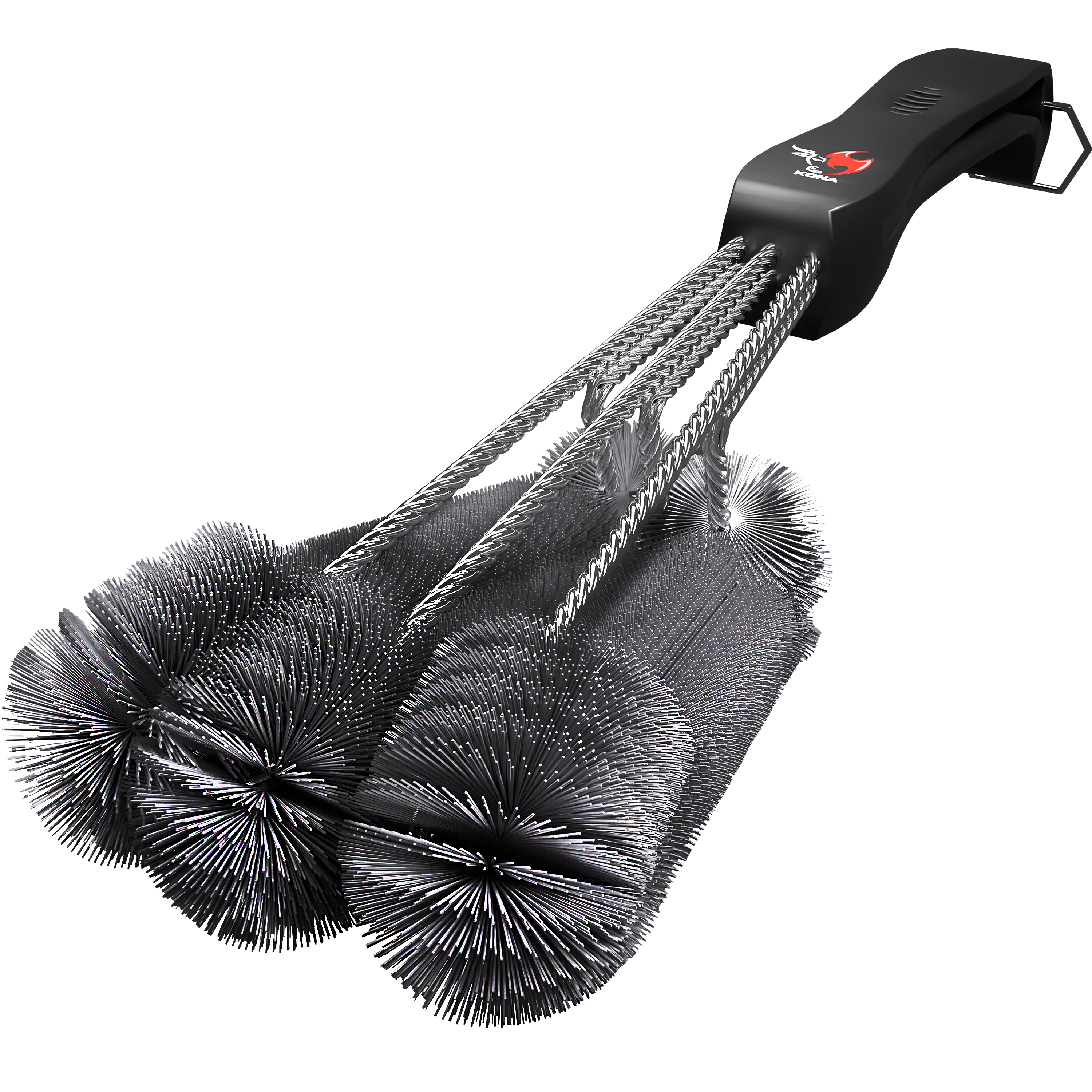
The warm-grate brush
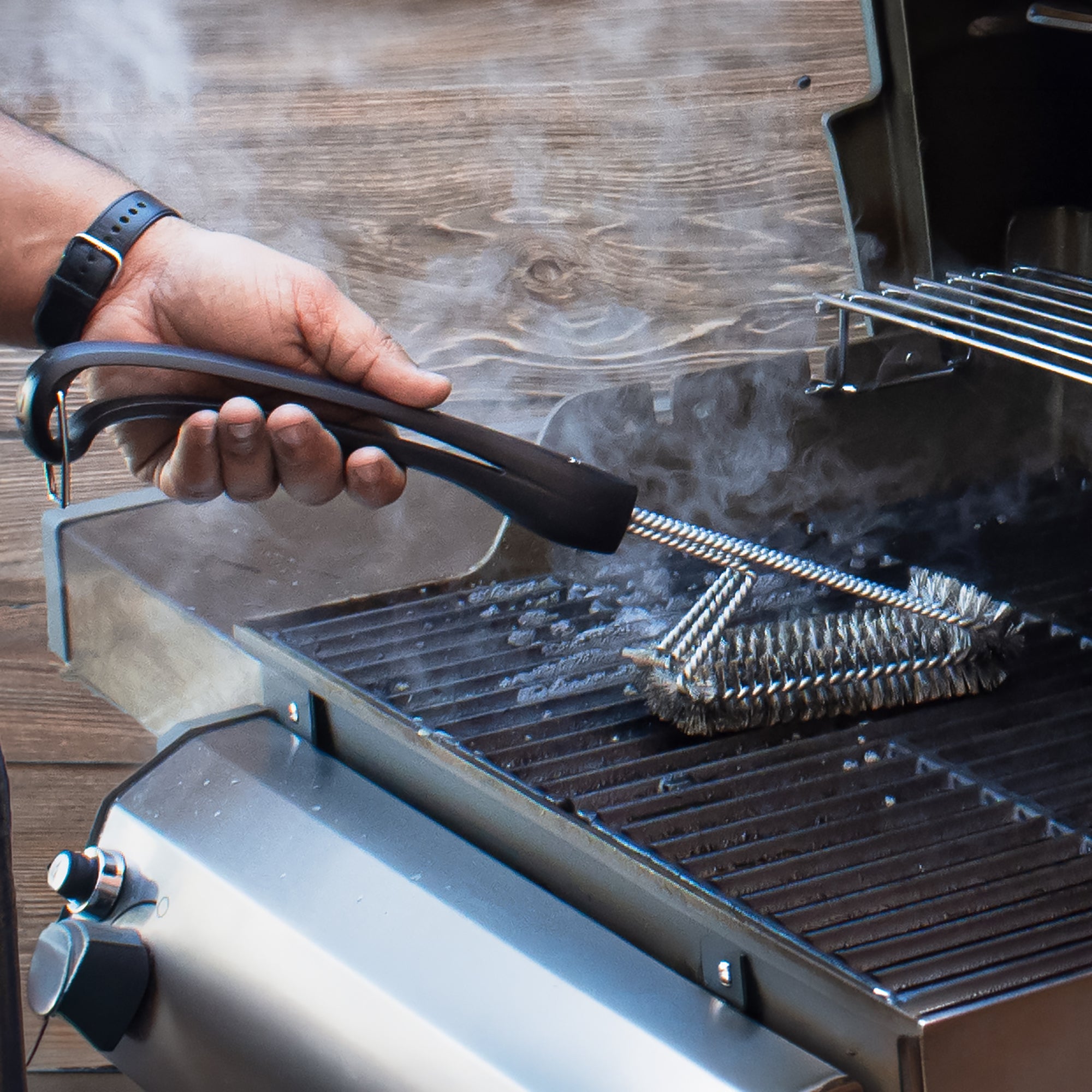
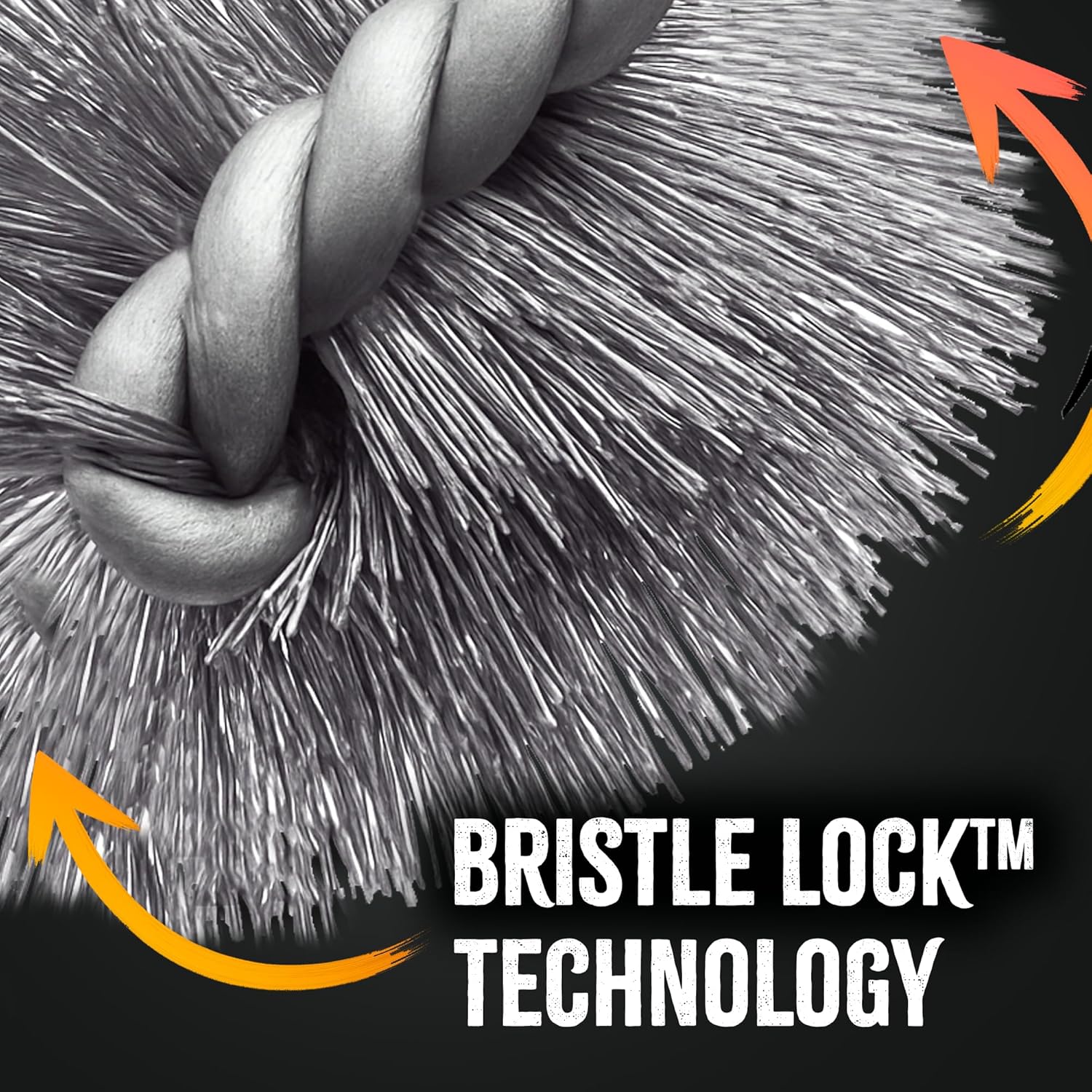
Soft nylon bristles that flex into the grooves of the grate without scoring the enamel. You use it warm, right after the cook, when the residue is still soft. Thirty seconds a side and you're done.
The bristle-free scraper
A shaped wooden edge that wears itself into the exact profile of your grates over the first few uses. No bristles at all, so nothing can break off and end up in your food. This is the tool for the stuck-on carbon the brush skips over.
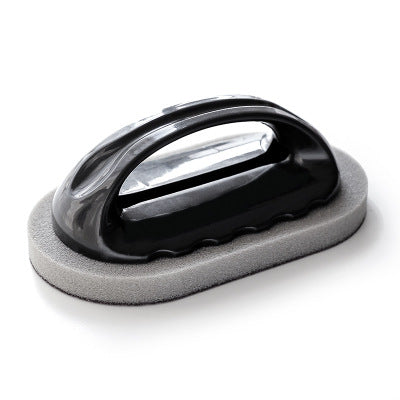
The scrub sponge
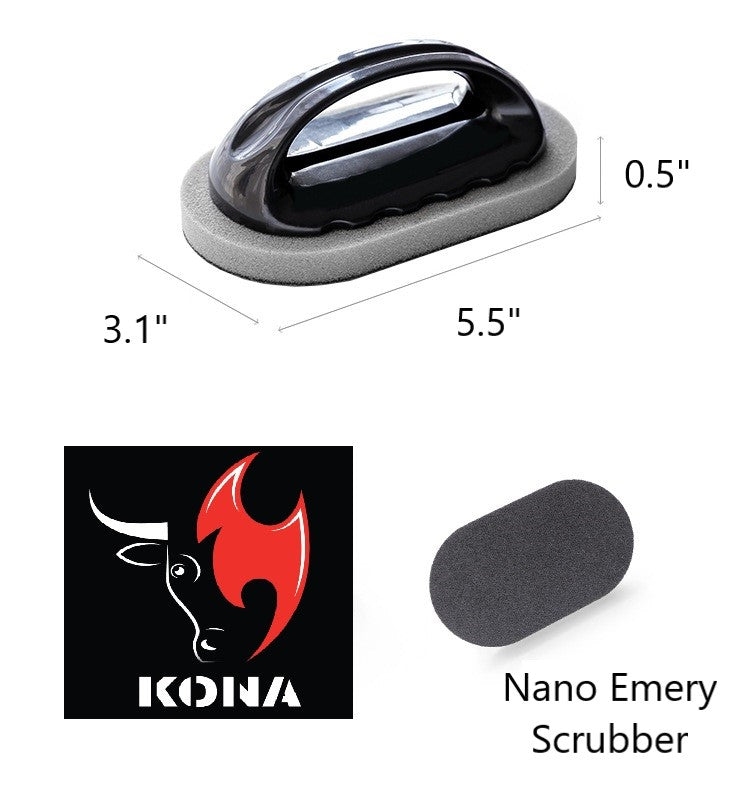
For the baked-on spots and the flat surfaces, a fine emery sponge lifts residue without cutting the coating. Good for grates, and just as good for the side tables and the exterior.
The degreaser
The part that saves your grates. A food-safe spray that dissolves grease so you're not leaning on the tools. This is where cleaning stops being a workout.
Best grill cleaning kit from Kona
Here's what I'd put together for porcelain grates, and why each piece earns its spot.
- 360 Clean Bristle Grill Brush: the daily driver. Nylon bristles wrap the grate on three sides so one pass does what three passes with a flat brush does. Use it warm.
- Safe/Clean Wooden Grill Scraper: bristle-free, and it molds to your grate profile so it reaches the carbon the brush misses. Bottle opener on the handle, which you'll appreciate more than you expect.
- Nano Emery Scrub Sponge (set of 2): the deep-clean tool for baked-on spots and flat surfaces, without scratching the coating.
- Safe/Clean Grill Cleaner and Degreaser: a 23 oz food-safe spray that loosens the grease so the tools barely have to work. This is the piece most people skip and then wonder why cleaning is such a chore.
- 360 Clean Brush, Wood Grain Handle: same warm-grate nylon head, if you'd rather have the wood handle.
How to clean porcelain grates step by step
Fastest routine that actually protects the coating:
- Fire the grill and let the grates heat for about five minutes. Heat softens the residue and opens it up for the degreaser.
- Turn off the burners. Spray the degreaser across the warm grates and let it sit for a minute. Don't rush this part. The minute is doing the work.
- Run the nylon brush along each bar, following the grooves, not across them.
- For any stuck carbon, switch to the wooden scraper and let the shaped edge do it. For flat baked-on spots, the emery sponge.
- Wipe with a damp cloth, then run the grill hot for a couple minutes to dry the grates so they don't sit wet.
Do this after most cooks and the buildup never gets a chance to harden. A kit that lives next to the grill gets used. One that lives in the garage doesn't.
A note from Jamie
I learned the porcelain lesson the hard way, on a set of grates I liked, with a wire brush I trusted. Cut a scratch right down the middle bar and watched it rust out over one winter. Cost me a grate I didn't need to lose. The chemistry background made the fix obvious once I stopped being stubborn about it: change the tool, save the surface. Cook to temperature, not time, and clean to the finish, not to how hard you can scrub.
Explore more
Grill Cleaning Kit FAQs
How do you clean porcelain grill grates without scratching them?
Heat the grates for about five minutes, spray a food-safe degreaser, let it sit a minute, then use a soft nylon brush or a bristle-free wooden scraper along the bars. Skip anything with stiff metal wire, which gouges the enamel and lets rust start under the coating.
What should be in a grill cleaning kit?
For porcelain grates, a warm-grate nylon brush, a bristle-free scraper, a non-scratch scrub sponge, and a food-safe degreaser cover almost everything. The degreaser is the piece that cuts the scrubbing, so don't leave it out.
Are nylon grill brushes safe for porcelain grates?
Yes, when you use them on warm grates. The heat softens the residue so the soft nylon flexes into the grooves without scoring the enamel. Cold grates make you press harder, which is what you're trying to avoid.
Can you use a wire brush on porcelain grates?
We don't recommend it. Wire bristles scratch the porcelain coating, and loose bristles are a known safety problem. A bristle-free scraper and a nylon brush clean just as well without the risk to your grates or your food.
How often should you clean grill grates?
A quick brush after most cooks keeps buildup from hardening, and a deeper degreaser clean every few weeks handles the rest. Cleaning warm, right after you cook, is far easier than scraping cold, baked-on residue later.
Sort by
5 products